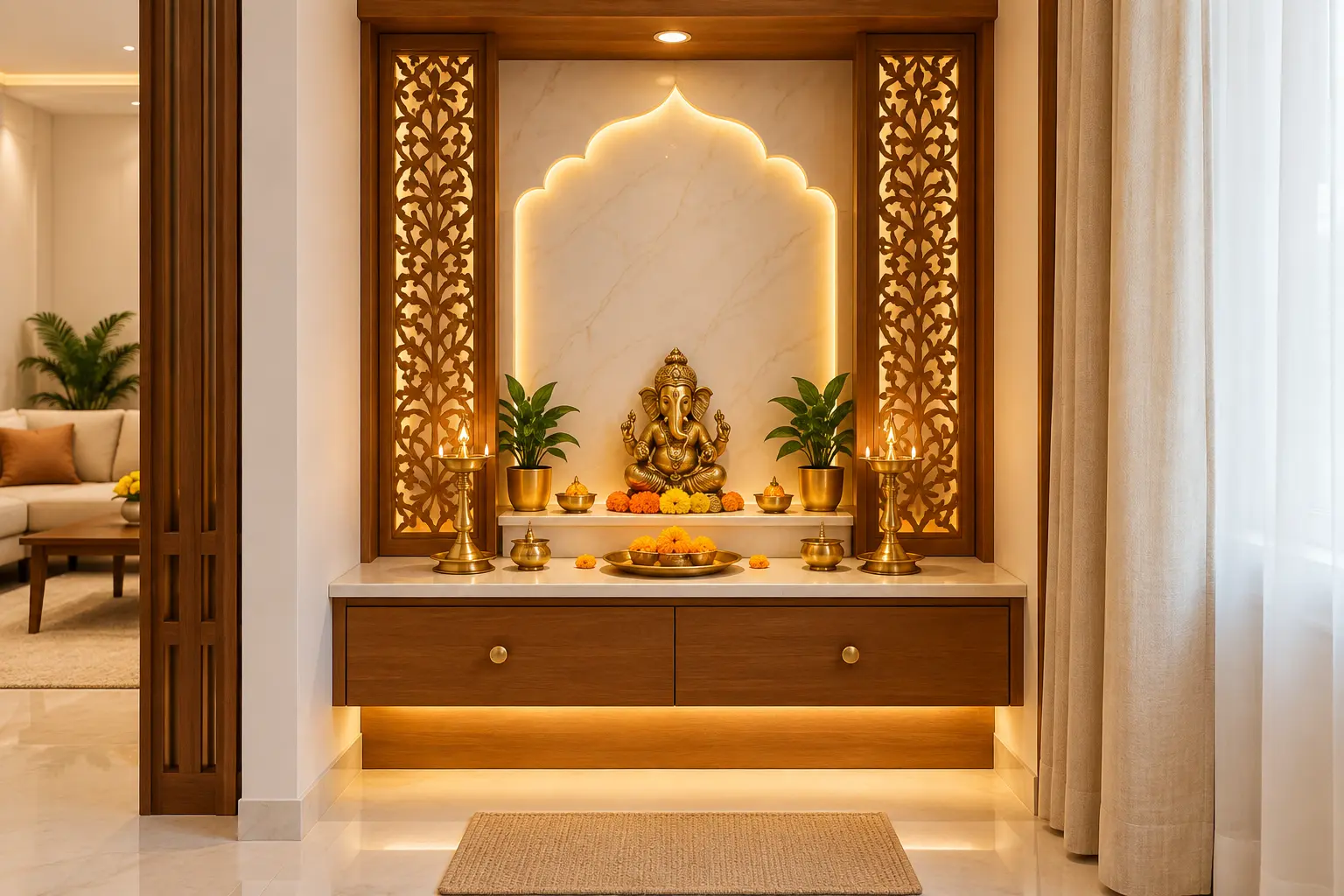
Pooja room design ideas for small Indian homes: Create a peaceful and beautiful prayer space
In Indian homes, a pooja room is more than just a place of worship. It is a peaceful corner where families begin their mornings with prayers, celebrate festivals, and reconnect with their spiritual traditions. However, creating a dedicated prayer space can be challenging in modern apartments, compact 1BHK flats, and small 2BHK homes where every square foot matters.
The good news is that a beautiful pooja space does not require a separate room. With thoughtful planning, clever storage, elegant lighting, and the right materials, even a small corner can become a welcoming place for daily prayers.
From wall-mounted mandirs and wooden pooja cabinets to modern marble backdrops and space-saving prayer units, there are numerous ways to incorporate a sacred space into your home without compromising its overall interior design.
"A beautiful pooja room is not defined by its size, but by the peace, devotion, and warmth it brings into your home."
Explore these 15 practical pooja room design ideas for small Indian homes to create a spiritual corner that is functional, elegant, and suited to modern living.
Why a well-designed pooja space matters in small homes
A thoughtfully designed pooja area can bring visual harmony and a sense of calm to your living space. In compact Indian homes, it also allows homeowners to maintain a dedicated place for worship without sacrificing valuable floor space.
A well-planned pooja corner offers several benefits:
- Creates a dedicated space for daily prayers and meditation.
- Makes better use of unused walls, corners, and niches.
- Keeps idols, prayer books, diyas, and pooja essentials organised.
- Complements the home's existing interior design.
- Provides a meaningful space for family traditions and festivals.
The key is to choose a design that balances traditional Indian elements with practical features suited to everyday living.
15 beautiful pooja room design ideas for small Indian homes
1. Wall-mounted pooja unit for compact apartments

A wall-mounted pooja unit is one of the most practical solutions for homes with limited floor space. Instead of installing a large traditional mandir, a compact wooden cabinet can be fixed to a suitable wall, leaving the floor open.
Choose a design with carved wooden doors, a small shelf for idols, and concealed drawers for prayer essentials. Warm LED lighting can further enhance the appearance of the mandir without making the space feel crowded.
For modern Indian apartments, a floating pooja unit finished in natural wood or off-white laminate can blend beautifully with the surrounding décor.
Design tip: Install the unit at a comfortable height and ensure the wall and mounting hardware can safely support its weight.
2. Small pooja room design in the living room

The living room is often the most practical location for a pooja space in compact homes. A small mandir can be incorporated into an unused corner, beside a TV unit, or along a feature wall.
A wooden frame, decorative backdrop, and subtle lighting can visually define the prayer area without separating it completely from the room.
Homeowners who prefer additional privacy can use a wooden partition, decorative jali panel, or sliding door.
Keep the pooja unit proportional to the room so that it does not obstruct movement or compete with the main furniture.
3. Modern wooden mandir design for home

Wooden mandirs remain popular in Indian homes because of their warmth, traditional appeal, and versatility.
For small spaces, select a compact wooden mandir with simple carvings, clean lines, and integrated storage. Teak, sheesham, or engineered wood with a suitable finish can be used depending on the budget and design requirements.
Traditional bells, brass accessories, and a decorative wooden arch can add character without overwhelming the space.
A light wood finish works especially well in small apartments because it creates a softer appearance than a large, heavily carved dark cabinet.
4. Pooja room design with a decorative jali partition

A decorative jali partition is ideal for homeowners who want to create a distinct prayer area without constructing an additional wall.
Laser-cut wooden or metal jali panels can introduce traditional patterns while allowing light to pass through. They also create a visual boundary between the mandir and the surrounding living space.
Choose geometric patterns, floral motifs, or traditional Indian designs that complement your home's architectural style.
For a more contemporary look, combine a simple mandir cabinet with a white or natural-wood jali partition.
5. Marble pooja room design for a luxurious look

Marble is an elegant material for pooja room interiors. Its smooth surface, subtle patterns, and light colours can create a refined and peaceful atmosphere.
A full marble mandir may not be practical for every small home, but a marble backdrop or countertop can provide a similar visual effect without requiring a large structure.
White or cream-coloured marble paired with brass accessories and warm lighting creates a timeless combination.
For budget-conscious homeowners, marble-look tiles or suitable engineered surfaces can provide a similar decorative appearance.
Design tip: If using real stone, verify the weight, wall support, and installation requirements before selecting a floating design.
6. Pooja room design under the staircase

The space beneath a staircase is often overlooked, yet it can accommodate a compact prayer area in some homes.
A customised wooden mandir can fit within the available dimensions, while pull-out drawers provide storage for incense, prayer books, and festival decorations.
Decorative lighting and a simple background can make the space feel welcoming.
However, the area should be clean, dry, adequately ventilated, and comfortable to access. Homeowners who follow Vastu traditions may prefer another location, as some traditions discourage placing a mandir beneath stairs.
7. Corner pooja unit for small apartments

Unused corners offer excellent opportunities for space-saving interior design.
A compact L-shaped or triangular pooja shelf can fit neatly into a corner without disturbing the room's main layout.
Combine a small wooden platform, decorative wall panel, and one or two shelves for idols and prayer essentials.
For a minimal appearance, use neutral colours and limit the number of decorative items.
Corner mandirs are particularly suitable for studio apartments, compact bedrooms, and small living rooms.
8. Pooja room with sliding doors

Sliding doors are useful when there is not enough clearance for conventional hinged cabinet doors.
A pooja unit with sliding wooden, frosted glass, or decorative-panel doors can remain visually discreet when not in use.
This design is especially helpful in living rooms and passageways where open cabinet doors might obstruct movement.
Choose a smooth sliding mechanism and keep enough clearance for comfortable access to the prayer area.
9. Minimalist pooja room design with floating shelves

Minimalist interior design focuses on simplicity, functionality, and carefully selected decorative elements.
A floating shelf with a clean backdrop and soft illumination can create an elegant pooja corner without a large cabinet.
Choose a neutral colour palette such as white, beige, cream, or light brown. A small brass bell, framed artwork, or traditional diya can add character.
Avoid overcrowding the shelves with excessive decorations.
"When every inch matters, thoughtful design makes even the smallest corner feel meaningful."
10. Pooja room design with traditional Indian arches

Traditional arches can make a small pooja room visually distinctive.
An arched wooden frame, decorative niche, or carved panel can introduce temple-inspired architectural details without requiring a large dedicated room.
Pair the arch with a simple platform and subtle lighting to maintain a balanced appearance.
For contemporary interiors, consider an understated arch in cream, ivory, or natural wood rather than an elaborate structure.
11. Pooja room design in a small wall niche

A wall niche can create a dedicated prayer space while maintaining a streamlined appearance.
An existing recess can be transformed with a decorative backdrop, compact shelves, and integrated lighting.
A niche design works particularly well in small living rooms, hallways, and apartment entrances where a freestanding mandir may reduce circulation space.
Avoid cutting into structural walls without professional assessment. It is generally more practical to use an existing recess or create a shallow decorative niche.
12. Pooja room with smart storage solutions

Storage is essential for keeping a compact pooja space tidy.
Prayer areas often contain incense, cotton wicks, oil, prayer books, decorative cloth, and festival accessories. Without organised storage, even a beautiful mandir can quickly become cluttered.
Consider incorporating small drawers, concealed compartments, or shelves into the design.
Store frequently used items within easy reach and reserve higher or concealed storage for occasional decorations.
Keep matches, lighters, and combustible supplies safely stored away from children and any flame.
13. White and gold pooja room design

A white-and-gold colour palette can create a bright and sophisticated prayer space.
White cabinets and light-coloured backdrops help a compact mandir feel visually open, while gold-toned handles, brass bells, and decorative borders introduce warmth.
This combination complements contemporary living rooms, neutral bedrooms, and modern Indian apartment interiors.
For a balanced appearance, use gold as an accent rather than covering every surface with metallic finishes.
14. Pooja room design with soft LED lighting

Lighting can significantly influence the atmosphere of a prayer space.
Warm LED strips placed behind a decorative panel or beneath a shelf can highlight the mandir without producing excessive glare.
Small recessed lights can also illuminate idols and framed artwork.
Choose accessible fixtures suitable for the installation location, and ensure electrical connections are installed safely.
Battery-operated LED diyas can be useful in apartments where open flames are restricted or a permanent flame-safe location is unavailable.
15. Compact pooja room design for a 1BHK or 2BHK flat

In a 1BHK or 2BHK apartment, the best prayer-space design is often one that serves its purpose without disrupting the overall layout.
A compact vertical cabinet with an elevated prayer platform and lower storage drawers can offer a practical arrangement.
Alternatively, a wall-mounted mandir can be incorporated into the living room, dining area, or another suitable quiet corner.
Choose a consistent material palette so the mandir feels like an intentional part of the home's interior design.
The final design should account for accessibility, ventilation, available natural light, family preferences, and the space required for daily rituals.
How to choose the right pooja room design for a small home
Selecting a mandir design involves more than choosing an attractive cabinet. Consider the available space, your family's prayer routine, storage requirements, and the visual style of your home.
| Home type | Suggested pooja design |
|---|---|
| Studio apartment | Floating wall-mounted mandir |
| Small 1BHK flat | Compact wooden pooja cabinet |
| 2BHK apartment | Living room pooja unit with storage |
| Home with unused corner | Corner mandir with floating shelves |
| Modern minimalist home | Simple wall niche with LED lighting |
| Traditional Indian home | Wooden mandir with decorative carvings |
| Home with limited door clearance | Sliding-door pooja cabinet |
The right choice depends on how much space you can dedicate without compromising your home's comfort and movement.
Best materials for modern pooja room designs
The material you choose influences the mandir's appearance, maintenance, durability, and installation requirements.
| Material | Design advantages | Considerations |
|---|---|---|
| Solid wood | Warm, traditional appearance | Requires appropriate finishing and care |
| Engineered wood | Versatile and budget-friendly | Protect from moisture and heat |
| Marble | Elegant and durable surface | Heavy and may require specialist installation |
| Marble-look tiles | Decorative stone-like appearance | Requires an appropriate supporting surface |
| Metal jali | Adds decorative patterns and separation | Edges and fixing must be safe |
| Glass | Creates a light, contemporary appearance | Needs regular cleaning and suitable safety glass |
For a compact apartment, a combination of wood, light-coloured surfaces, and small brass accents can create a balanced appearance.
Pooja room Vastu tips for small Indian homes
Many Indian homeowners prefer to consider Vastu Shastra when designing their pooja spaces.
According to common Vastu traditions, the northeast part of a home is often considered suitable for a pooja room. East and north are also commonly preferred, although recommendations differ between traditions.
If you follow Vastu principles, consider these traditional guidelines:
- Explore the northeast area if it is practical for your home's layout.
- Keep the prayer space clean and organised.
- Avoid placing unnecessary household storage in the mandir.
- Choose a well-lit and peaceful location.
- Consider your family's customary practices when positioning idols and planning the direction of prayer.
These are traditional cultural guidelines, not scientifically established requirements for wellbeing or household outcomes. A mandir that is accessible, safe, and practical for your family can be meaningful regardless of the apartment's layout.
Common mistakes to avoid when designing a small pooja room
A compact pooja room needs careful planning. Decorative choices should never compromise everyday usability or safety.
- Overcrowding the mandir: Too many idols, accessories, and decorative objects can make a small space difficult to maintain.
- Ignoring storage: Without shelves or drawers, pooja materials can quickly accumulate around the prayer platform.
- Using inappropriate lighting: Harsh lights can reduce the calm atmosphere, while poor-quality electrical installations can create hazards.
- Choosing oversized furniture: A large mandir can restrict movement in compact rooms.
- Placing flames close to combustible materials: Keep lit diyas and incense away from curtains, wooden panels, shelves, decorations, and electrical cables. Never leave flames unattended.
- Ignoring ventilation: If your family uses incense or oil lamps, choose a space with suitable airflow. Electric LED diyas are an alternative where smoke or open flames are a concern.
Frequently asked questions about pooja room design
1. What is the best pooja room design for a small Indian home?
A wall-mounted mandir or compact wooden pooja cabinet is a practical option for many small Indian homes. These designs use limited floor space and can incorporate shelves, drawers, and decorative lighting.
2. Can I create a pooja room in a 1BHK flat?
Yes. A dedicated room is not necessary. A compact prayer space can be incorporated into a suitable living room corner, wall niche, or cabinet, depending on the flat's layout and the family's preferences.
3. Which direction is best for a pooja room according to Vastu?
Many Vastu traditions recommend the northeast direction, with east and north also commonly considered. Specific practices can differ. Choose a practical, safe, and accessible location that respects your family's customs.
4. How can I decorate a small pooja room on a budget?
Use floating shelves, a simple wooden platform, framed devotional artwork, warm LED lighting, and a small number of traditional accessories. Reusing an existing cabinet or niche can also reduce the need for additional furniture.
5. Can a pooja room be designed in the living room?
Yes. A pooja unit can be integrated into a living room through a wall-mounted cabinet, decorative partition, recessed niche, or compact wooden mandir. The design should complement the surrounding furniture and leave sufficient circulation space.
6. Which colour is suitable for a small pooja room?
White, cream, beige, and natural wood finishes are versatile choices for compact prayer spaces. These lighter shades can help the mandir blend into modern interiors. Gold and brass accents can add a traditional touch.
7. Is a wooden mandir suitable for a small apartment?
Yes. A compact wooden mandir can work well in a small apartment. Choose a proportionate design with adequate storage and ensure that oil lamps, incense, and other heat sources are kept safely away from combustible surfaces.
8. How much space is required for a small pooja room?
There is no single minimum size for a home pooja space. A small wall-mounted shelf may be sufficient for a few devotional items, while a cabinet or dedicated prayer area requires more space. The design should provide comfortable access and enough room for the family's usual rituals.
9. Can I use LED lighting in my home mandir?
Yes. Warm LED lighting can illuminate the prayer area and highlight decorative features. Use suitable fixtures and safe electrical connections, keeping wiring away from any lit diya or incense.
10. What is the difference between a traditional and modern pooja room design?
Traditional pooja room designs often feature carved wood, ornamental arches, bells, and temple-inspired details. Modern designs generally use cleaner lines, compact cabinets, concealed storage, simple backdrops, and integrated lighting. Both styles can be adapted for small Indian homes.
Conclusion: Create a beautiful pooja space even in a small home
A peaceful pooja room does not need to occupy a large area. With creative planning and thoughtful interior design, a compact corner can become one of the most meaningful spaces in your home.
From wall-mounted mandirs and modern wooden cabinets to marble backdrops, traditional jali partitions, and minimalist floating shelves, there are many ways to create a beautiful prayer area that complements contemporary Indian living.
Whether you live in a studio apartment, a compact 1BHK flat, or a modern 2BHK home, focus on functionality, comfort, safety, and your family's personal traditions.
"The most beautiful prayer space is one that brings together thoughtful design, simplicity, and the traditions that make a house feel like home."
Explore more home interior design ideas on Click2Interior and discover practical inspiration for creating a stylish, comfortable, and personalised Indian home.
Comments (0)
Leave a Comment
No comments yet. Be the first to comment!