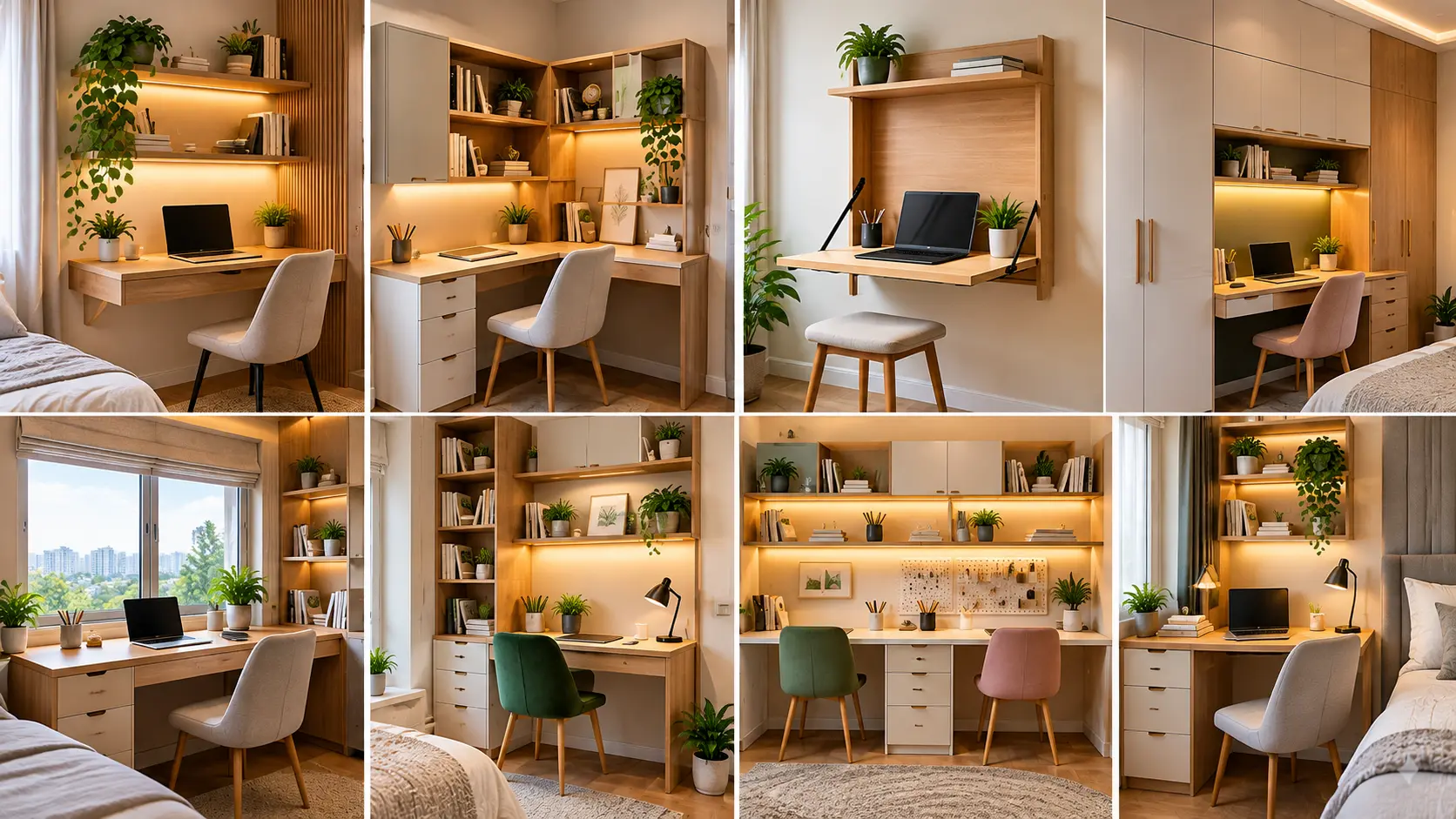
15 Modern Study Table Designs for Small Rooms in 2026
Finding the right study table design for small rooms can transform even a compact bedroom into a practical, organised and stylish workspace. From floating desks and corner units to foldable tables and wardrobe-integrated study areas, there are many smart ways to maximise limited floor space.
In this guide, explore 15 functional study table ideas, recommended dimensions, storage solutions and useful design tips for modern Indian homes.
What Is the Best Study Table Design for a Small Room?
Quick answer: The best study table designs for small rooms include wall-mounted desks, foldable tables, corner study units and compact desks with vertical storage. These designs use limited space efficiently without compromising essential writing space, lighting or comfortable seating.
For many compact bedrooms, a desk approximately 90–120 cm wide and 45–60 cm deep is a useful starting point. Always measure your available space and chair clearance before selecting a design.
15 Best Study Table Designs for Small Rooms
Whether you have a compact apartment, a small children's bedroom or a shared home office, these practical designs help create a comfortable study zone.
1. Wall-Mounted Study Table Design
A wall-mounted study table is one of the most effective space-saving solutions for a small bedroom. The tabletop is fixed securely to the wall, reducing the need for bulky furniture legs.
- Creates an open and uncluttered floor area.
- Works well in compact bedrooms and studio apartments.
- Can include floating shelves for books and stationery.
- Pairs beautifully with minimalist interiors.
Best for: Small bedrooms with limited floor space.
2. Foldable Study Table for Small Bedrooms
A foldable study desk offers flexibility when space is limited. Its surface can be folded away when not needed, allowing the same area to serve different purposes.
Select strong hinges and appropriate wall fixings, and check the manufacturer's recommended load capacity.
Best for: Studio flats, guest rooms and multipurpose spaces.
3. Corner Study Table Design
An unused bedroom corner can become a dedicated workstation with a compact corner desk. A triangular or L-shaped tabletop can provide useful working space without dominating the room.
Add a small drawer and corner shelves to keep notebooks, chargers and daily essentials organised.
Best for: Rooms with an unused corner.
4. Study Table with Built-In Storage
A study table with drawers, overhead cabinets or open shelves helps reduce visible clutter. Choose slim storage units instead of bulky cabinets to preserve legroom.
Use organisers for stationery, a shelf for books and cable clips to maintain a tidy workspace.
Best for: Students with books and study accessories.
5. Floating Study Table with Shelves
A floating study desk combines a slim tabletop with wall-mounted storage. It creates a clean, modern look while keeping the floor visually open.
Light wood finishes, white shelves and warm task lighting are attractive choices for modern Indian homes.
Best for: Minimalist bedroom interiors.
6. Study Table Attached to a Wardrobe
A wardrobe-integrated study table creates a coordinated furniture layout. The desktop can extend from the wardrobe side panel or fit inside a specially designed furniture niche.
Match the tabletop finish with the wardrobe and ensure the arrangement does not block drawers, doors or comfortable seating.
Best for: Custom-designed apartment bedrooms.
7. Window-Side Study Table Design
Placing a study table near a window makes use of natural daylight and may create a pleasant reading space.
Position the desk to minimise screen glare, use curtains or blinds where necessary and add a suitable desk lamp for evening work.
Best for: Bedrooms with good natural lighting.
8. Minimalist Wooden Study Table
A wooden study table with clean lines, a slim frame and limited storage can make a small room feel warmer and less crowded.
Oak-look, walnut-look and light natural finishes pair well with neutral wall colours.
Best for: Scandinavian and contemporary interiors.
9. Study Table with Bookshelf
Combining a desk with a vertical bookshelf makes efficient use of wall height rather than floor area. Shelves can hold textbooks, files and decorative items.
Keep heavy objects on lower shelves and ensure tall furniture is properly secured.
Best for: Students who need additional book storage.
10. Study Table for Kids' Small Bedrooms
Children's study tables should prioritise stability, reachable storage and comfortable seating. Rounded edges and easy-to-clean finishes are useful for everyday use.
Consider adjustable furniture that can accommodate a growing child's changing needs.
Best for: Children's bedrooms and school study areas.
11. Dual Study Table for Two Students
A shared study table can create two individual workstations along a single wall. Separate drawers, personal organisers and task lights help each user keep their space organised.
Plan enough working width for both people and avoid restricting chair movement.
Best for: Siblings sharing a bedroom.
12. Small Study Table Beside the Bed
A compact desk beside the bed can sometimes replace a traditional bedside table and serve two purposes. One drawer can store smaller daily essentials.
Maintain a clear walkway and ensure the chair does not obstruct access to the bed.
Best for: Very compact bedrooms.
13. Modern Study Table with LED Lighting
Integrated lighting can make a compact desk feel more refined and practical. Under-shelf LED strips provide ambient illumination, while an adjustable task lamp supports reading and writing.
Avoid harsh reflections and position light to reduce shadows across the work surface.
Best for: Modern study and home-office setups.
14. Compact Computer and Study Desk
A compact computer desk can accommodate a laptop, keyboard and small monitor if planned carefully. Choose a stable surface with adequate depth and organise charging cables behind the desk.
For extended computer work, prioritise suitable screen height, chair adjustment and sufficient legroom.
Best for: Students, remote workers and laptop users.
15. Multipurpose Study Table with Hidden Storage
A multifunctional study table can include concealed compartments, a pull-out writing surface or an integrated dressing area.
This approach reduces the need for several separate furniture pieces, making it useful for modern 1 BHK and 2 BHK apartments.
Best for: Flexible, space-saving bedroom layouts.
Which Study Table Design Is Best for Your Room?
Compare the following options based on your available space and storage requirements.
| Study Table Type | Best Use | Storage | Space Saving |
|---|---|---|---|
| Wall-mounted | Compact bedrooms | Optional | High |
| Foldable | Multipurpose rooms | Limited | Very high when folded |
| Corner desk | Unused corners | Moderate | High |
| Desk with bookshelf | Student bedrooms | High | Moderate |
| Wardrobe-integrated | Custom bedrooms | High | High |
| Compact wooden desk | Flexible layouts | Varies | Moderate |
What Is the Ideal Study Table Size for Small Rooms?
The right dimensions depend on your height, equipment, chair and available room space. The following measurements are useful planning guidelines rather than fixed standards.
| Measurement | Suggested Starting Range |
|---|---|
| Desk width | 90–120 cm |
| Desk depth | 45–60 cm |
| Typical adult desk height | 73–76 cm |
| Chair clearance behind desk | About 75–90 cm where possible |
For children, use a properly sized desk and adjustable chair. A footrest may be helpful if their feet cannot comfortably reach the floor.
Best Materials and Colours for Small Study Tables
Engineered Wood
Plywood and quality engineered-wood boards offer a variety of finishes and can be used for custom study tables with drawers or shelves. Choose appropriate grades for local moisture conditions.
Solid Wood
Solid wood creates a warm and timeless appearance, though its cost and maintenance requirements depend on the timber and finish.
Metal and Wood Combination
Slim metal frames paired with wooden tops can create an industrial or contemporary look. Check frame stability and load capacity.
Recommended Colours
- White and light oak for a bright, airy appearance.
- Walnut and beige for warm, modern bedrooms.
- Sage green and natural wood for a calm study corner.
- Grey and black accents for a contemporary workspace.
Low-Budget Study Table Design Ideas
Creating a useful study space does not always require expensive custom furniture. Consider simple options that prioritise comfort and everyday functionality.
- Choose a compact ready-made desk instead of a large unit.
- Add wall-mounted shelves instead of a bulky bookcase.
- Reuse suitable furniture with minor modifications.
- Select durable, easy-to-maintain laminate finishes.
- Use organisers to make better use of existing drawers.
- Consider a foldable desk when floor space is limited.
Cost tip: Compare material quality, dimensions, installation, hardware, delivery and warranty before purchasing. Custom furniture costs vary by city and specifications.
How to Design a Study Area in a Small Bedroom
- Measure the available space: Include wardrobe doors, room entrances and pathways.
- Select the right desk type: Consider a corner, floating or foldable design depending on the layout.
- Prioritise ergonomic comfort: Choose a suitable chair, desk height and screen position.
- Use vertical storage: Add shelves or compact wall organisers.
- Plan lighting: Combine daylight with an adjustable task lamp.
- Manage cables: Keep chargers and electrical wiring organised and safely positioned.
- Keep the design simple: Avoid oversized furniture and excessive decoration.
Study Table Design Ideas for Indian Apartments
In cities such as Mumbai, Pune, Bengaluru, Delhi, Hyderabad and Chennai, many apartment owners need furniture that supports several activities within a limited space.
For a compact 1 BHK home, a floating study desk or foldable wall unit may work well. In a 2 BHK apartment, a wardrobe-integrated table can make the bedroom more organised. For a family home with children, a shared desk with individual storage can be a practical solution.
Always adapt these ideas to your actual floor plan, ventilation, lighting and storage needs rather than selecting furniture based on appearance alone.
Common Mistakes to Avoid
- Buying an oversized study table without measuring the room.
- Choosing drawers that interfere with comfortable legroom.
- Ignoring lighting, glare and electrical sockets.
- Installing wall-mounted furniture without suitable structural support.
- Using a poorly sized chair for long study sessions.
- Filling the tabletop with excessive decorative items.
- Blocking wardrobe doors and important walking routes.
Frequently Asked Questions
1. Which study table is best for a small room?
Wall-mounted, foldable and compact corner desks are excellent choices because they make efficient use of limited floor space.
2. What is the ideal study table size for a small bedroom?
A desk approximately 90–120 cm wide and 45–60 cm deep works for many compact rooms. The final size depends on the user, equipment and available space.
3. How can I make a study area in a small bedroom?
Select an unused corner or wall, install a compact desk, add vertical shelves, use suitable lighting and provide comfortable chair clearance.
4. Is a foldable study table good for daily use?
Yes, a stable foldable desk can be suitable for daily study and laptop work. Check the mounting, load rating and available working surface.
5. Can I combine a wardrobe and study table?
Yes. A custom study desk can be integrated with a wardrobe to create a coordinated layout, provided storage access and legroom remain comfortable.
6. Which study table colour makes a small room look bigger?
White, cream, light oak and other pale finishes can create a brighter, more open visual effect, particularly when paired with coordinated walls.
7. Where should a study table be placed?
Place it where the user can work comfortably without blocking pathways. A position near natural light can be helpful when screen glare and direct sunlight are controlled.
8. How do I organise a study table without drawers?
Add floating shelves, a desk organiser, wall hooks, bookends and cable clips to keep essential items accessible while leaving the work surface clear.
Final Thoughts
Choosing the right study table design for small rooms is about balancing functionality, comfort and appearance. A wall-mounted desk can keep the floor open, a corner workstation can use overlooked space and a wardrobe-integrated design can create a coordinated bedroom layout.
Before purchasing or installing a study table, measure the room carefully, plan adequate lighting and choose a design suited to everyday needs. Even a modest study corner can become an attractive and productive part of your home.
Comments (0)
Leave a Comment
No comments yet. Be the first to comment!