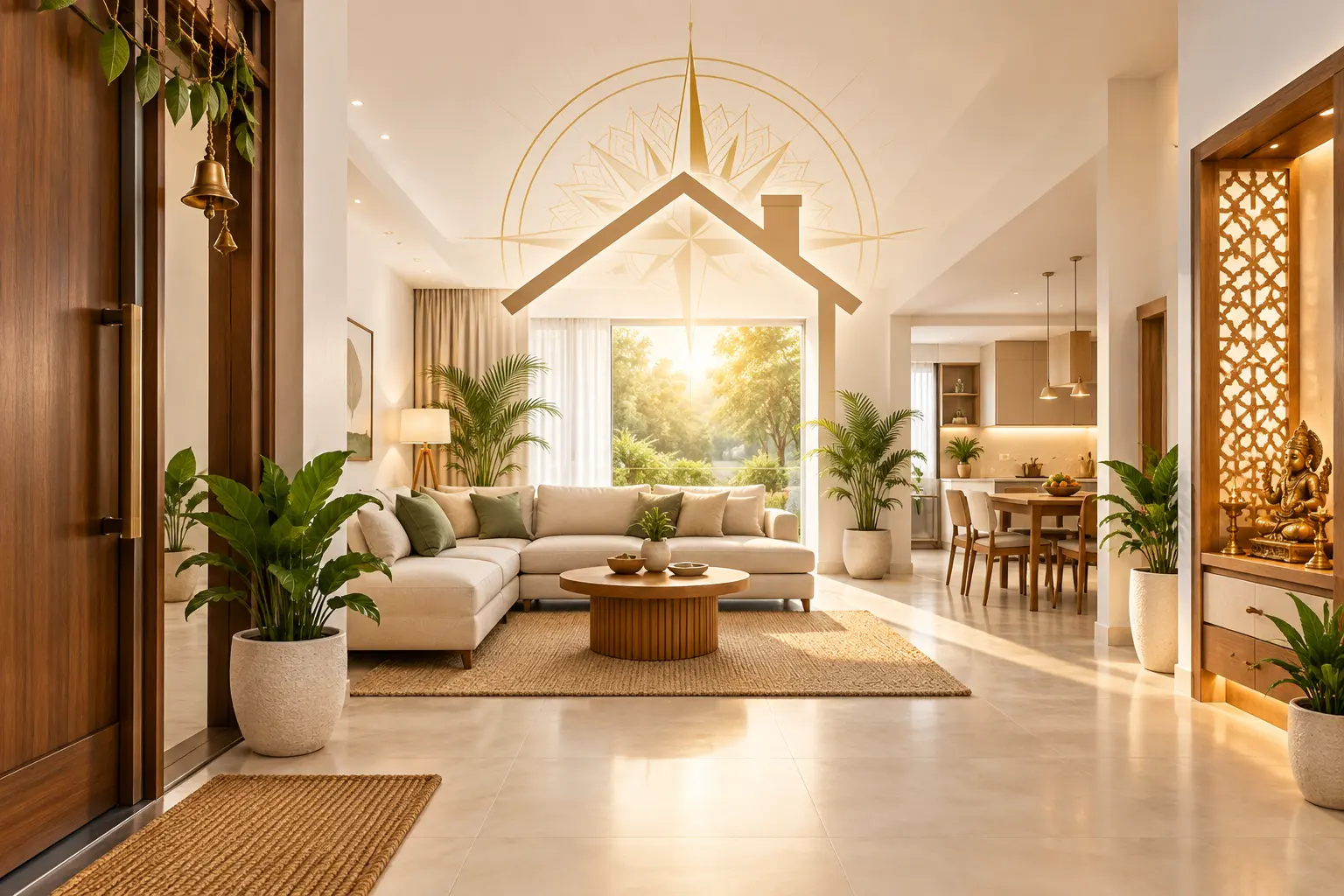
Home Vastu Tips for Interior Design: A Complete Room-by-Room Guide
A beautiful home is not only about stylish furniture, expensive décor, or trending colours. For many Indian homeowners, the way a home is planned and arranged is equally important. This is where Vastu Shastra for home interiors becomes relevant.
Vastu Shastra is a traditional Indian system of architecture and spatial planning that considers directions, room placement, natural elements, light, ventilation, and the arrangement of different areas of a home.
“A thoughtfully designed home combines beauty, functionality, comfort, and personal beliefs into one harmonious space.”
Modern homeowners do not necessarily have to redesign their entire house to incorporate Vastu ideas. Many Vastu-friendly interior design changes can be achieved through furniture placement, lighting, colours, storage, mirrors, and décor.
Whether you live in a 1BHK, 2BHK, 3BHK, apartment, villa, or independent house, this room-by-room guide explains commonly followed Vastu principles while helping you keep your home stylish, comfortable, and practical.
What Is Vastu Shastra in Interior Design?
Vastu Shastra is a traditional Indian approach to planning buildings and interiors according to directions and five elements commonly described as:
- Earth
- Water
- Fire
- Air
- Space
In interior design, Vastu principles are commonly applied to the placement of the main entrance, living room, kitchen, bedrooms, pooja room, bathrooms, furniture, mirrors, colours, and storage.
The objective is not simply to follow directions but to create an organised, comfortable, well-lit, and thoughtfully planned living environment.
1. Main Entrance Vastu Tips
The main entrance is one of the most important areas considered in traditional home Vastu.
North, east, and north-east entrances are commonly preferred according to traditional Vastu guidance.
However, homeowners living in apartments often cannot change the position of their main door. In such situations, you can focus on creating a welcoming and clutter-free entrance.
Simple Vastu-Friendly Entrance Ideas
- Keep the entrance clean and organised
- Use adequate lighting
- Avoid unnecessary clutter
- Keep the doorway easy to access
- Create a visually welcoming entrance
You can decorate the entrance with a stylish nameplate, indoor plants, warm lighting, a console table, or subtle wall décor.
Avoid overcrowding the entrance with shoes, large storage units, damaged décor, or unnecessary furniture.
Interior Design Tip
Use warm lighting and a minimal console with artwork or a carefully placed mirror to create a premium hotel-style entrance while keeping the space functional.
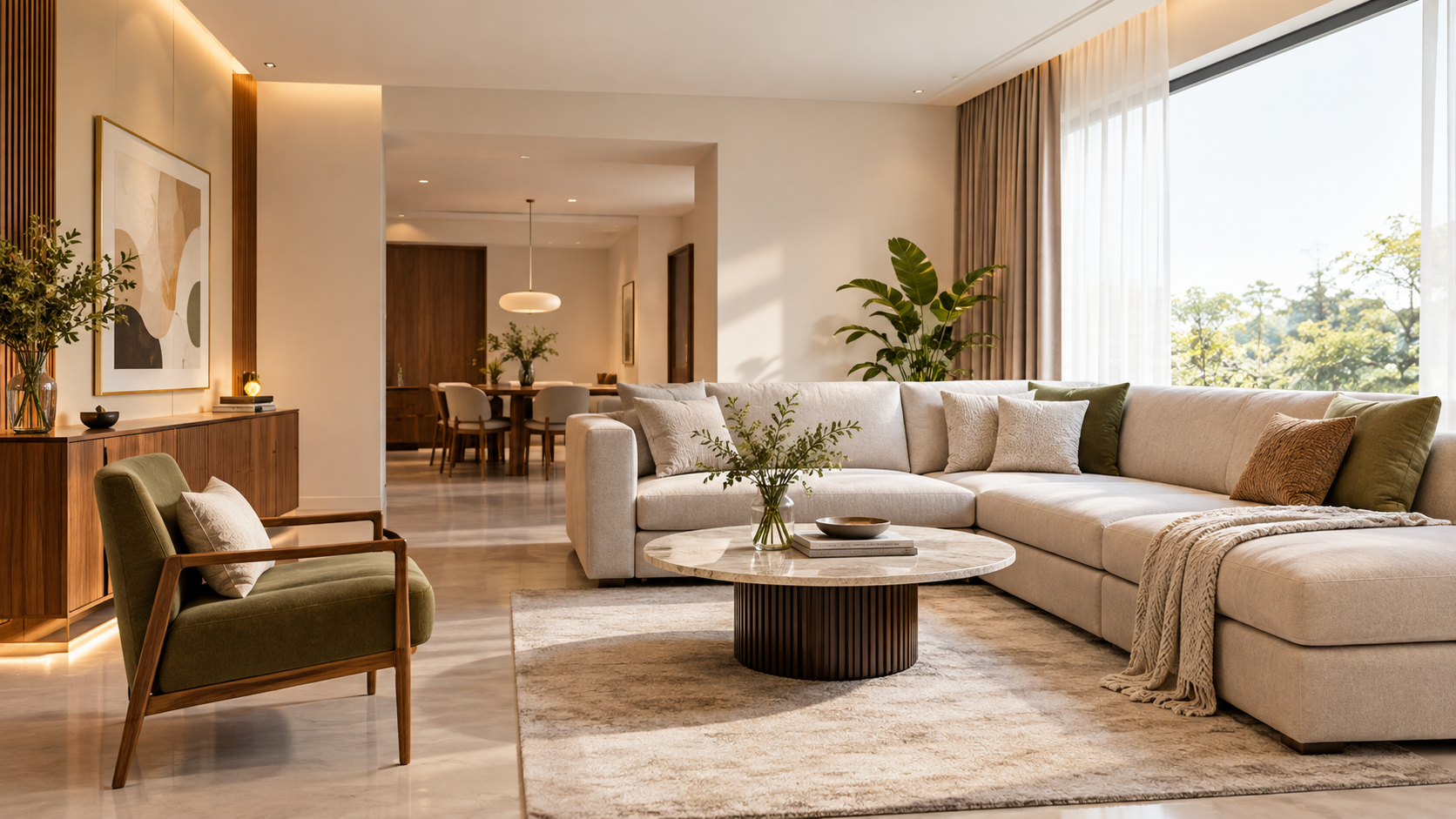
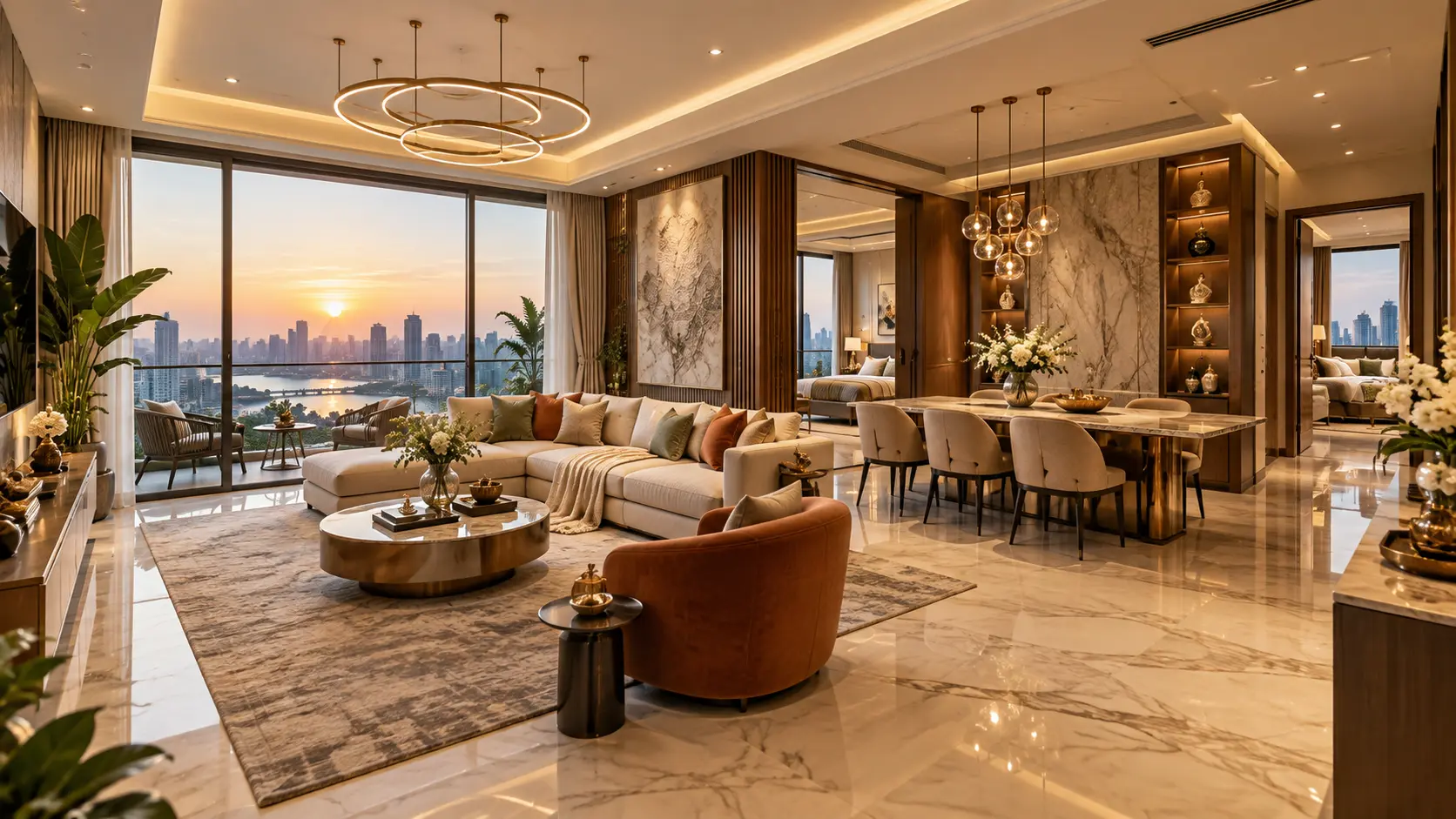
2. Living Room Vastu and Interior Design
The living room is where families relax and guests spend most of their time.
According to commonly followed Vastu principles, north, east, and north-east areas are often preferred for living spaces.
Sofa Placement
Large sofas and heavier furniture can be placed toward the south or west side of the room where possible.
Keep the centre of the living room relatively open instead of filling every available space with furniture.
Living Room Colours
- Off-white
- Beige
- Cream
- Light grey
- Soft green
- Pastel shades
- Warm neutral tones
These shades can also help smaller apartments appear brighter and more spacious.
Keep Natural Light in Mind
Large windows, sheer curtains, mirrors, and lighter wall colours can help distribute natural light throughout the living room.
“A good living room should feel open enough for movement while still providing comfortable seating and storage.”
3. Kitchen Vastu Tips for Modern Homes
The kitchen is traditionally associated with the fire element.
According to commonly followed Vastu guidance, the south-east direction is generally preferred for kitchens, while north-west is often considered an alternative.
For homeowners who already live in completed apartments, changing the kitchen location may not be practical. Instead, focus on creating an efficient and functional layout.
Kitchen Interior Tips
Try to maintain separate zones for:
- Cooking
- Washing
- Food preparation
- Storage
Traditional Vastu guidance also commonly recommends maintaining some separation between the stove and sink, reflecting the symbolic distinction between fire and water.
From a practical interior-design perspective, separating cooking, washing, and preparation areas can also improve kitchen workflow.
Best Kitchen Colours
- White and wood
- Ivory
- Beige
- Soft yellow
- Light green
- Warm earthy shades
4. Bedroom Vastu Tips for Better Interior Planning
Bedrooms should primarily support relaxation, privacy, comfortable movement, and adequate storage.
Traditional Vastu guidance commonly associates the south-west portion of the home with the master bedroom.
Bed Placement Tips
Avoid placing the bed where:
- It blocks doors
- It obstructs wardrobes
- There is insufficient walking space
- The headboard has inadequate support
A strong headboard against a solid wall often gives the bedroom a visually grounded and balanced appearance.
Bedroom Colours
- Beige
- Warm white
- Taupe
- Pastel green
- Soft blue
- Light brown
- Muted peach
Bedroom Mirror Placement
Large mirrors directly facing the bed are commonly avoided in traditional Vastu practices.
From an interior-design perspective, mirrors should also be positioned carefully so they enhance natural light and visual depth without producing uncomfortable reflections.
5. Pooja Room Vastu Tips
The north-east direction is traditionally preferred for a pooja or prayer area.
Modern apartments may not always have enough space for a dedicated pooja room. A compact pooja unit can instead be incorporated into:
- Living rooms
- Dining areas
- Passage spaces
- Custom cabinetry
- Wall-mounted units
Pooja Unit Design Ideas
- Wooden panels
- Jaali partitions
- Marble finishes
- Small storage drawers
- Warm LED lighting
- Brass accessories
The pooja unit should complement the overall interior style while maintaining a calm and peaceful appearance.
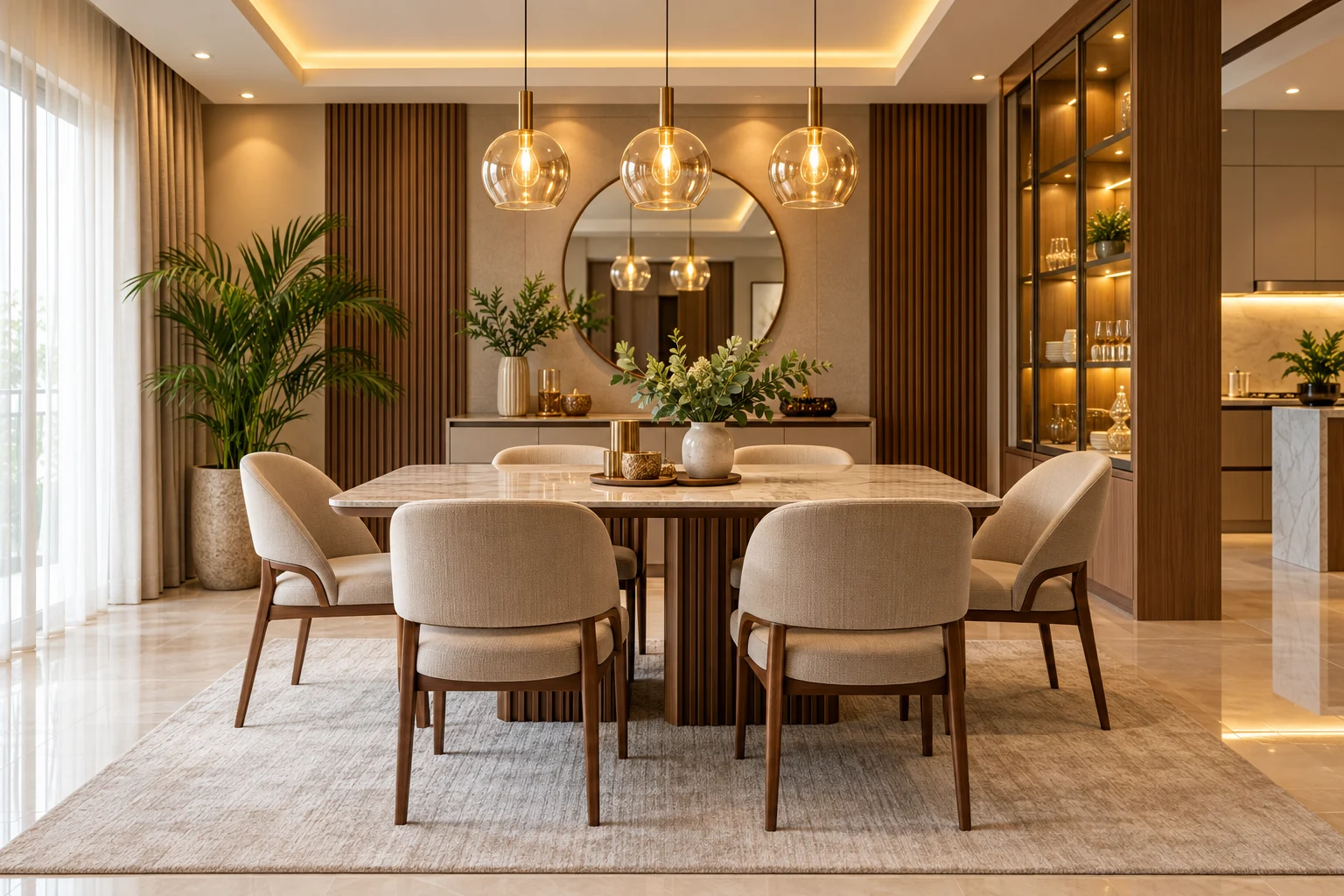
6. Dining Room Vastu and Interior Ideas
A dining area should encourage comfortable movement and conversation.
Place the dining table where it does not obstruct circulation between the kitchen and living room.
Dining Ideas for Small Homes
- Four-seater dining tables
- Extendable dining tables
- Bench seating
- Wall-mounted dining tables
- Built-in storage seating
A pendant light above the dining table can create a strong focal point without using valuable floor space.
7. Bathroom and Toilet Vastu Tips
Traditional Vastu guidance commonly associates bathrooms or toilets with western or north-western portions of a home, although recommendations may differ between Vastu traditions.
For existing apartments, plumbing locations usually cannot be changed easily. Therefore, prioritise:
- Good ventilation
- Proper drainage
- Dry surfaces
- Adequate lighting
- Organised storage
- Anti-skid flooring
Bathroom Design Tip
Light-coloured tiles, glass shower partitions, floating vanities, and large mirrors can help compact bathrooms feel more open and spacious.
8. Vastu Tips for Children's Rooms
Children's bedrooms need to support sleeping, studying, playing, and storage.
Create separate functional areas whenever space allows:
- Study Zone: Desk and task lighting
- Sleep Zone: Bed and bedside storage
- Storage Zone: Wardrobe and shelving
- Activity Zone: Open floor space
Neutral furniture with easily replaceable décor can make future room updates easier as children grow.
9. Study Room and Work-From-Home Vastu
A productive study or home-office environment depends heavily on lighting, ergonomics, organisation, and distraction management.
Place the desk where adequate daylight is available without creating excessive screen glare.
Home Office Interior Checklist
- Comfortable ergonomic seating
- Dedicated task lighting
- Closed storage
- Cable management
- Minimal wall décor
- Indoor plants where suitable
10. Vastu Tips for Balcony and Indoor Plants
Plants are increasingly becoming an important part of modern interior design because they bring natural texture and freshness into indoor spaces.
You can use plants in:
- Balconies
- Living rooms
- Window corners
- Entrance areas
- Home offices
Always select plants according to available sunlight and maintenance requirements. Avoid overcrowding small balconies because excessive planters may reduce usable space.
11. Vastu-Friendly Colours for Home Interiors
Colour dramatically changes how a room feels. Instead of choosing one shade for the entire home, create a connected and balanced colour palette.
Living Room
Warm neutrals, whites, beige, sage green and soft earthy shades.
Bedroom
Pastels, earthy neutrals, muted colours and soft tones.
Kitchen
White, cream, subtle yellow, light green and natural wood tones.
Study Room
Light green, beige, white and calming neutral shades.
Bathroom
White, beige, light grey and soft earthy shades.
Room size, natural daylight, ceiling height, flooring, and furniture should also influence the final colour selection.
12. Keep the Centre of the Home Open
Traditional Vastu concepts often refer to the centre of the home as the Brahmasthan, which is generally recommended to remain relatively open and uncluttered.
Avoid unnecessarily filling central circulation spaces with:
- Oversized furniture
- Storage boxes
- Large decorative pieces
- Extra partitions
Open circulation can also make a home feel larger and improve movement between rooms.
13. Decluttering Is One of the Easiest Vastu-Friendly Changes
You do not necessarily need structural renovation to create a more organised home.
Start by removing:
- Broken furniture
- Unused décor
- Unnecessary packaging
- Clothes you no longer use
- Cluttered cables
- Excess furniture
Then introduce smart storage solutions such as:
- Hydraulic beds
- Floor-to-ceiling wardrobes
- Storage benches
- Modular cabinets
- Hidden drawers
- Floating shelves
“Good interior design is not about filling a home with more things; it is about giving everything you need the right place.”
14. Vastu Tips for Small Apartments and 2BHK Homes
Many homeowners worry that their apartment is not perfectly aligned according to Vastu.
In modern residential buildings, homeowners often cannot change:
- Main door location
- Kitchen position
- Bathrooms
- Structural walls
- Windows
- Plumbing shafts
Instead, focus on adjustable interior elements such as:
- Furniture placement
- Lighting
- Storage
- Colours
- Décor
- Clutter management
- Mirrors
- Indoor plants
A practical home should always prioritise structural safety, ventilation, usability, building regulations, and comfort alongside personal design or Vastu preferences.
Quick Vastu Direction Guide for Home
| Home Area | Traditionally Preferred Direction |
|---|---|
| Main Entrance | North, East or North-East |
| Living Room | North, East or North-East |
| Kitchen | South-East |
| Master Bedroom | South-West |
| Pooja Room | North-East |
| Children's Room | West or North-West |
| Bathroom | West or North-West |
| Centre of Home | Open and uncluttered |
These are commonly referenced traditional recommendations and can vary between Vastu traditions and practitioners.
Can Interior Design and Vastu Work Together?
Yes.
Modern interior design and traditional Vastu preferences do not necessarily have to compete with each other.
An interior designer can work around fixed architectural limitations using:
- Furniture positioning
- Space planning
- Colours
- Lighting
- Materials
- Storage
- Partitions
- Decorative elements
The goal should be to create a home that feels comfortable, functional, attractive, and aligned with the homeowner's preferences.
Frequently Asked Questions About Home Vastu
Which direction is best for the main entrance according to Vastu?
North, east, and north-east are commonly preferred directions in traditional Vastu guidance.
Which direction is best for the kitchen?
South-east is traditionally considered the preferred direction for a kitchen, while north-west is commonly suggested as an alternative.
Which direction is best for the master bedroom?
The south-west portion of a home is traditionally preferred for the master bedroom.
Where should a pooja room be located?
The north-east area is commonly recommended for a pooja or prayer room.
Can Vastu be followed in a flat?
Yes. Even when structural changes are impossible, homeowners can incorporate Vastu preferences through furniture arrangement, storage, lighting, colours, décor, and organisation.
Can I follow Vastu without renovating my house?
Yes. Decluttering, rearranging furniture, improving lighting, reorganising storage, and adjusting décor can all be done without major renovation.
Is Vastu scientifically proven?
Vastu Shastra is a traditional Indian architectural and cultural system. Claims that particular Vastu arrangements guarantee wealth, health, relationships, or success should not be treated as established scientific facts.
Homeowners can use Vastu according to their cultural or personal preferences while also considering architecture, safety, ventilation, functionality, and practical interior-design requirements.
Final Thoughts
Creating a Vastu-friendly home does not have to mean sacrificing modern design.
The most practical approach is to combine traditional Vastu preferences with good space planning, natural light, functional furniture, efficient storage, comfortable colours, and modern interior design .
Whether you are designing a new home or upgrading an existing apartment, small thoughtful changes can dramatically improve how organised, spacious, and welcoming your interiors feel.
At Click2Interior, we explore practical interior design ideas for modern Indian homes—from smart space planning and renovation ideas to storage solutions, décor trends, and room-by-room inspiration.
Before making major structural changes based on Vastu, always consider the building's structural requirements and consult qualified architectural or engineering professionals where appropriate.
Comments (0)
Leave a Comment
No comments yet. Be the first to comment!