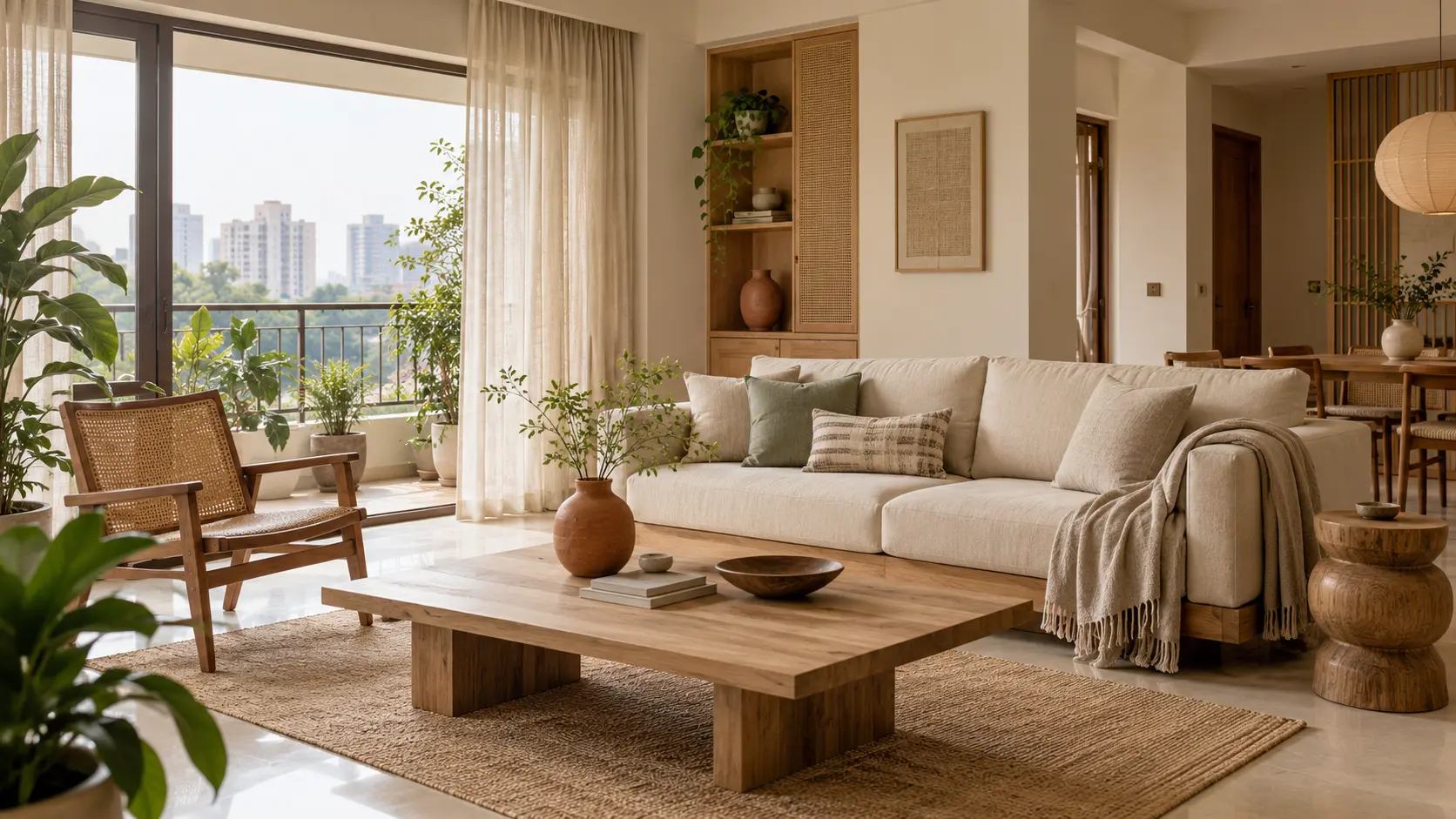
Japandi Interior Design for Indian Homes: A Complete Guide to Calm and Functional Living
Indian homes are becoming more mindful, uncluttered and connected to nature. Japandi interior design fits this change perfectly by combining Japanese minimalism with Scandinavian warmth.
The style uses natural materials, neutral colours, practical furniture and thoughtful décor to create rooms that feel calm without appearing cold. With the right adaptations, Japandi design can work beautifully in Indian apartments, villas and compact urban homes.
What Is Japandi Interior Design?
Japandi is an interior design style that combines two philosophies:
- Japanese design: Known for simplicity, craftsmanship and harmony with nature.
- Scandinavian design: Known for comfort, functionality and warm minimalism.
The result is a peaceful interior with clean lines, natural textures, limited decoration and furniture that serves a clear purpose.
In simple terms, Japandi interior design creates a warm, functional and clutter-free home using natural materials and neutral colours.
Is Japandi Design Suitable for Indian Homes?
Yes. Japandi design is suitable for Indian homes because it supports efficient space planning, practical storage and easy movement.
It is particularly useful for urban apartments in Mumbai, Pune, Bengaluru, Delhi, Noida and other busy cities where homeowners want their interiors to feel peaceful and spacious.
However, the style should be adapted to Indian conditions by considering:
- Hot and humid weather
- Dust and regular cleaning
- Indian cooking requirements
- Larger storage needs
- Family seating arrangements
- Festivals and religious spaces
- Locally available materials
A successful Indian Japandi home should look elegant while remaining comfortable for everyday family life.
Key Elements of Japandi Interior Design
1. Warm Neutral Colours
Japandi interiors commonly use soft, nature-inspired colours rather than bright or highly contrasting shades.
Suitable colours for Indian homes include:
- Warm white
- Cream
- Beige
- Taupe
- Sand
- Light grey
- Muted brown
- Sage green
- Terracotta
Pure white can sometimes feel harsh under strong Indian sunlight. Warmer shades such as ivory, almond and light beige usually create a softer atmosphere.
Use darker colours such as charcoal, deep brown or black only as accents to add definition.
2. Natural Materials
Natural materials give Japandi homes their warmth and character.
Consider using:
- Solid wood
- Plywood with wood veneer
- Cane and rattan
- Bamboo
- Cotton
- Linen
- Jute
- Clay
- Natural stone
- Handmade ceramics
For Indian homes, durable plywood with a high-quality wood-finish laminate or veneer can provide the Japandi appearance at a more practical cost.
Choose finishes that can tolerate local humidity, dust and regular maintenance.
3. Simple and Functional Furniture
Japandi furniture features clean lines, simple forms and minimal ornamentation. Every item should have a practical purpose.
Good furniture choices include:
- Low-profile sofas
- Wooden coffee tables
- Platform beds
- Straight-lined dining tables
- Compact side tables
- Floating TV units
- Handleless storage cabinets
- Multifunctional furniture
Low furniture can make a room feel visually open, but comfort should remain the priority. Select seating heights that are practical for children, adults and older family members.
4. Clutter-Free Spaces
Japandi design does not require an empty home. It requires thoughtful organisation.
Use concealed storage to manage:
- Electronic accessories
- Toys
- Documents
- Extra utensils
- Seasonal clothes
- Cleaning supplies
- Religious items
- Everyday household products
Full-height cabinets, storage beds and built-in wardrobes can accommodate Indian household needs without disturbing the minimalist appearance.
5. Natural Light
Natural light helps Japandi interiors feel bright, calm and connected to the outdoors.
Use:
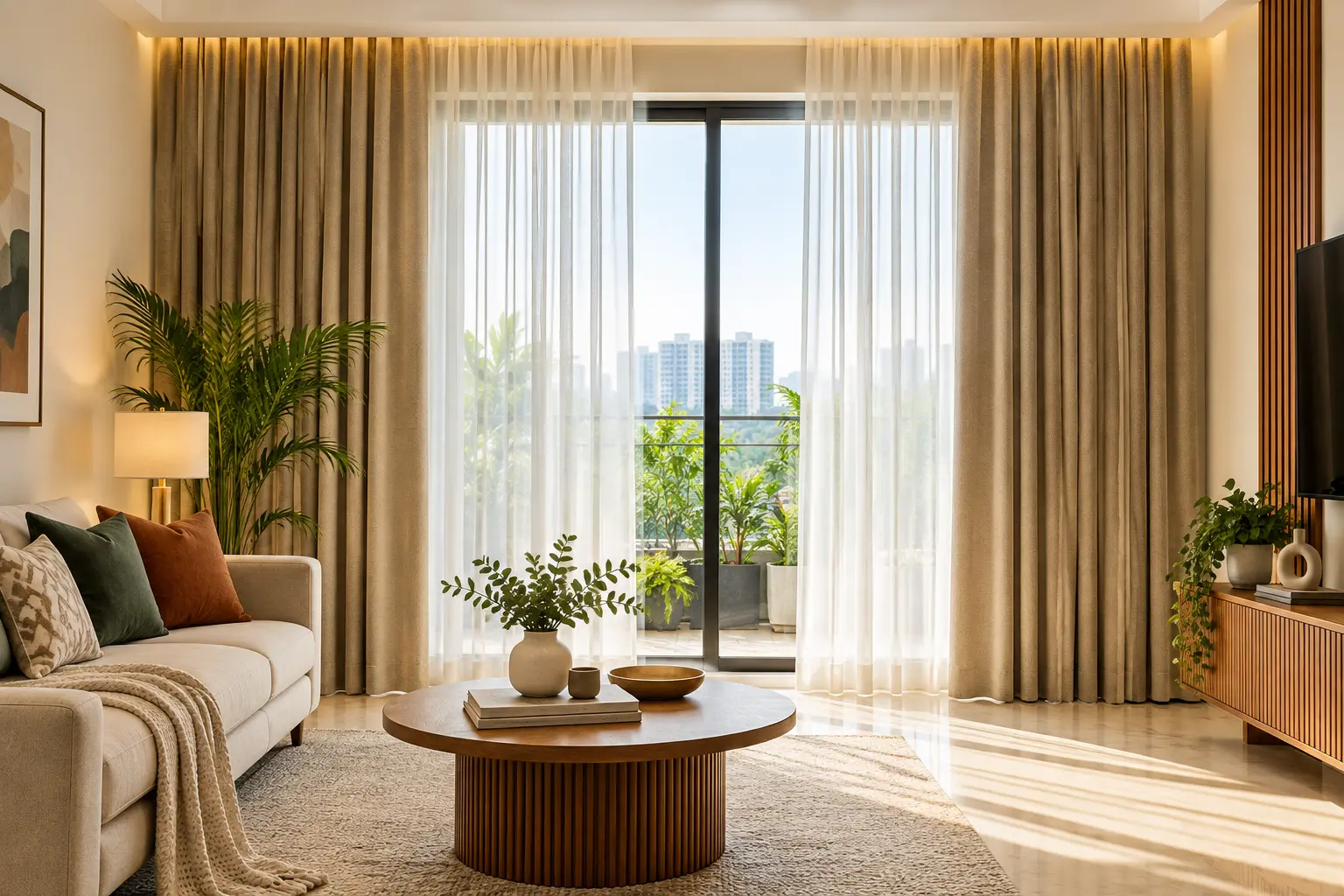
- Lightweight curtains
- Sheer fabrics
- Unblocked windows
- Light wall colours
- Reflective surfaces in moderation
- Simple window treatments
In homes that receive strong afternoon sunlight, combine sheer curtains with blinds or thicker curtains to manage heat and glare.
6. Soft Layered Lighting
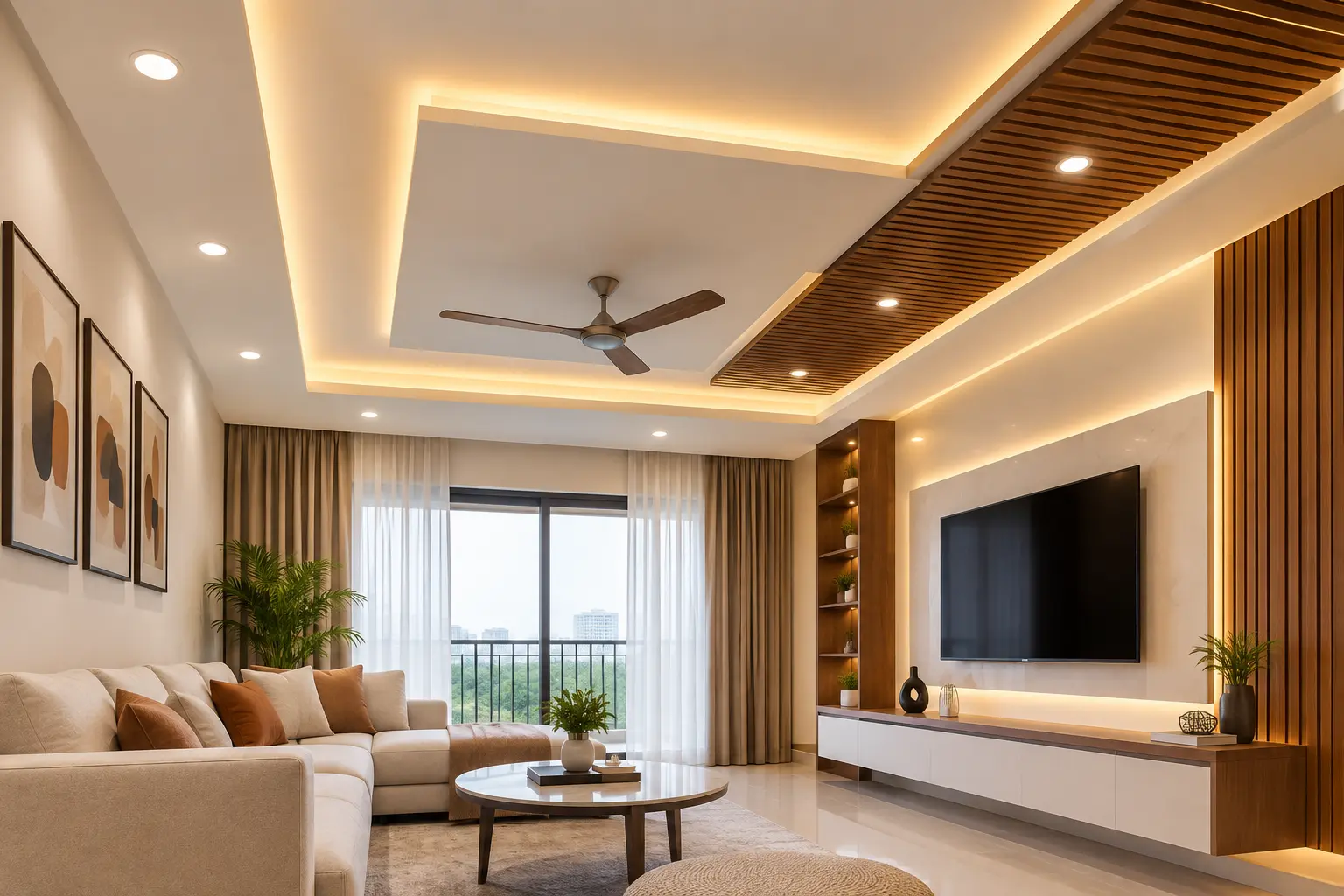
Avoid relying on a single bright ceiling light. Japandi rooms feel more comfortable when different lighting sources are used together.
A balanced lighting plan can include:
- Warm ceiling lights
- Pendant lights
- Wall lights
- Floor lamps
- Bedside lamps
- Concealed LED lighting
Choose warm-white lighting for bedrooms and living rooms. Brighter task lighting can be used in kitchens, studies and work areas.
7. Limited but Meaningful Décor
Japandi décor follows the principle of quality over quantity. Instead of displaying many small objects, choose a few meaningful pieces.
Suitable décor includes:
- Handmade pottery
- Indoor plants
- Framed minimal artwork
- Woven baskets
- Sculptural lamps
- Wooden trays
- Textured cushions
- Artisan-made objects
Leave some surfaces empty. Negative space is an important part of the overall design.
Japandi Living Room Ideas
A Japandi living room should feel welcoming, open and easy to maintain.
Start with a neutral sofa in beige, cream or light grey. Add a wooden coffee table, a textured rug and a simple floating TV unit. Use one or two indoor plants to introduce natural colour.
For a practical Indian living room, include concealed storage inside the TV console or under a window seat. If additional seating is required, use lightweight chairs or compact ottomans instead of oversized furniture.
Limit the colour palette to two or three main shades to maintain a consistent appearance.
Japandi Bedroom Design
The bedroom is one of the best places to introduce Japandi design because the style naturally supports relaxation.
A Japandi bedroom can include:
- A simple wooden or upholstered bed
- Warm neutral walls
- Cotton or linen bedding
- Handleless wardrobes
- Soft bedside lighting
- Minimal artwork
- One natural accent such as a plant or ceramic vase
Avoid excessive patterns and glossy finishes. Layer different textures instead—for example, combine plain bedding with a woven throw, wooden furniture and a soft rug.
Storage beds and full-height wardrobes can provide the functionality required in compact Indian bedrooms.
Japandi Kitchen Ideas for Indian Homes
Indian kitchens require more storage, ventilation and easy-to-clean surfaces than many minimal international kitchen examples show.
To create a practical Japandi kitchen, use:
- Flat-panel cabinets
- Warm white or beige finishes
- Light or medium wood tones
- Durable quartz countertops
- Easy-to-clean backsplashes
- Concealed appliance storage
- Organised drawers
- Tall pantry cabinets
Keep frequently used items accessible while storing less attractive packaging inside cabinets.
A powerful chimney and proper ventilation are important for managing smoke, oil and strong cooking aromas.
Japandi Dining Area Design
Choose a simple wooden dining table with comfortable chairs. Cane-backed or upholstered dining chairs can add texture without making the area look heavy.
A pendant light above the table creates a clear focal point. Complete the arrangement with a ceramic vase, a small plant or one handcrafted decorative object.
If space is limited, consider a bench with built-in storage or an extendable dining table.
Japandi Bathroom Ideas
A Japandi bathroom combines clean surfaces with natural-looking textures.
Suitable choices include:
- Stone-finish tiles
- Wood-look cabinets
- Frameless mirrors
- Floating vanities
- Warm lighting
- Matte black or brushed metal fixtures
- Concealed storage
Use real wood carefully in wet areas. Moisture-resistant wood-look tiles or laminates are often more practical for Indian bathrooms.
How to Add Indian Character to Japandi Interiors
Your home does not need to lose its Indian identity to follow the Japandi style. The two can be combined through carefully selected materials and handcrafted details.
Consider adding:
- Cane furniture made by Indian artisans
- Handwoven cotton cushions
- Jute rugs
- Terracotta planters
- Handmade ceramics
- Subtle Indian artwork
- Natural stone
- A simple wooden pooja unit
- Khadi or linen curtains
Choose one or two regional craft elements rather than displaying several decorative styles together.
Japandi Design for Small Indian Apartments
Japandi is an excellent style for a 1 BHK or 2 BHK apartment because it prioritises simplicity, movement and multifunctional design.
For a small home:
- Use light neutral colours
- Select furniture with visible floor space beneath it
- Install full-height concealed storage
- Avoid bulky decorative units
- Use sliding wardrobe doors where required
- Choose one main material throughout the home
- Keep windows visually open
- Use mirrors carefully to reflect light
- Select furniture according to the room’s scale
A smaller number of correctly sized pieces will make the room feel more spacious than several compact but unnecessary items.
Common Japandi Design Mistakes to Avoid
Making the Interior Too Empty
Minimalism does not mean removing comfort. Include soft fabrics, warm lighting and personal objects so the home feels lived-in.
Using Only Beige
A completely beige room can appear flat. Add visual depth through wood grains, stone, woven textiles, muted green or charcoal accents.
Ignoring Indian Storage Requirements
Open international-style interiors may not provide enough storage for Indian households. Plan concealed storage before finalising the design.
Choosing Impractical Materials
Untreated wood, delicate fabrics and difficult-to-clean surfaces may not suit every Indian climate or household.
Adding Too Many Decorative Objects
Japandi spaces depend on visual calm. Select fewer pieces and allow each object enough space to stand out.
Following Trends Without Considering Comfort
Low furniture and firm seating may look stylish but may not suit every family member. Test dimensions and comfort before purchasing.
How to Create a Japandi Home on a Budget
You do not need to renovate your entire home at once.
Begin with these simple changes:
- Declutter visible surfaces
- Repaint walls in a warm neutral shade
- Replace bright cushion covers with textured neutral fabrics
- Introduce one natural wooden element
- Use baskets for organisation
- Add warm lighting
- Keep only meaningful décor
- Introduce one or two indoor plants
- Reuse existing furniture with matte paint or wood-finish laminate
Focus on simplicity and consistency instead of expensive materials.
Frequently Asked Questions
What does Japandi mean in interior design?
Japandi is a design style that combines Japanese simplicity and craftsmanship with Scandinavian warmth, comfort and functionality.
Is Japandi design good for Indian homes?
Yes. Japandi works well in Indian homes when it includes practical storage, durable materials, comfortable seating, appropriate ventilation and easy-to-clean surfaces.
Which colours are used in Japandi interiors?
Japandi interiors generally use warm white, cream, beige, taupe, brown, soft grey, sage green and muted earthy shades.
Is Japandi suitable for small apartments?
Yes. Its light colours, simple furniture and clutter-free layouts can make a small apartment feel more open and organised.
What type of wood is suitable for a Japandi home?
Light or medium wood tones are commonly used. Indian homeowners can select solid wood, veneer or durable wood-finish laminates according to their budget and local climate.
Can Japandi interiors include Indian décor?
Yes. Handmade ceramics, cane furniture, jute rugs, terracotta, handwoven textiles and subtle Indian artwork can complement the Japandi style.
Is Japandi interior design expensive?
It does not have to be expensive. The look can be created through decluttering, neutral colours, thoughtful furniture selection, natural textures and locally available materials.
Final Thoughts
Japandi interior design for Indian homes offers a thoughtful balance between simplicity, warmth and everyday functionality. It can make an urban apartment feel calmer while providing the storage and durability required for Indian living.
The key is not to copy a showroom exactly. Adapt the style to your climate, family needs, cooking habits, storage requirements and personal preferences. With natural materials, warm colours, practical furniture and carefully selected décor, you can create a peaceful home that remains comfortable and distinctly yours.

Comments (0)
Leave a Comment
No comments yet. Be the first to comment!