
Personalized Home Interiors: How to Design a Home That Reflects Your Personality
Your home should feel like you. While trending interior styles can provide inspiration, the most beautiful homes are often the ones that reflect the personality, lifestyle, memories, and preferences of the people living in them.
In 2026, personalized home interiors are becoming increasingly popular as homeowners move away from perfectly coordinated showroom-style spaces. Instead, people are combining colors, textures, furniture, artwork, lighting, and meaningful décor to create homes that feel authentic and comfortable.
Whether you live in a compact apartment in Mumbai, a modern home in Pune, or a spacious house in Bengaluru, personalized interior design can help you create a space that looks stylish while supporting the way you actually live.
What Are Personalized Home Interiors?
Personalized home interiors are spaces designed around the homeowner's personality, lifestyle, preferences, memories, and daily needs rather than following a single design trend.
Instead of asking, "What style is popular right now?", personalized design starts with questions such as:
- What colors make you feel comfortable?
- How do you use each room?
- Which objects or memories are important to you?
- Do you prefer minimal or decorative spaces?
- Do you enjoy entertaining guests?
- What kind of furniture feels comfortable to you?
- Which materials and textures do you naturally prefer?
The result is a home that feels individual rather than copied from a catalogue.
Why Personalized Interior Design Is Trending in 2026
Homeowners are increasingly looking for interiors that combine functionality, comfort, individuality, and visual character.
Social media has made countless interior styles accessible, but it has also created a desire for homes that feel different from generic interiors. Personalized design allows homeowners to take inspiration from trends without allowing trends to completely define their homes.
Some of the biggest reasons for this shift include:
- Greater demand for functional homes
- Growing interest in meaningful décor
- Preference for comfortable and practical furniture
- Mixing modern and traditional elements
- Increased use of custom furniture
- Interest in sustainable and long-lasting materials
- Desire for interiors that support individual lifestyles
1. Start With Your Lifestyle
Before choosing furniture or colors, think about how you actually use your home.
A home designed for a family with children will have different requirements from a home occupied by a working professional, a couple, or someone who frequently entertains guests.
For example, if you work from home, you may need a dedicated workstation. If you enjoy cooking, the kitchen should prioritize storage and workflow. If you love reading, a comfortable reading corner can become an important part of your living room or bedroom.
Your lifestyle should influence the layout before decoration begins.
2. Choose Colors That Feel Like You
Color is one of the easiest ways to express personality through interior design.
If you prefer calm environments, consider soft neutrals, earthy tones, warm whites, muted greens, or subtle blues. If you enjoy energetic spaces, deeper colors or carefully selected accent shades can create more visual impact.
You don't need to use your favorite color everywhere.
Instead, use it strategically through:
- Accent walls
- Cushions
- Curtains
- Rugs
- Artwork
- Decorative objects
- Upholstery
- Lighting details
A personalized color palette should make the home feel comfortable rather than simply fashionable.
3. Display Meaningful Memories
One of the simplest ways to personalize a home is by displaying objects that have a story.
Family photographs, travel souvenirs, artwork, books, inherited furniture, handmade objects, and collectibles can give a room emotional character.
Instead of filling shelves with generic decorations, select pieces that mean something to you.
For example, a travel collection can become a gallery shelf, while family photographs can be arranged into a carefully planned wall display.
These details make an interior feel lived-in and personal.
4. Mix Different Interior Styles
You don't have to choose between modern, traditional, minimalist, industrial, or contemporary interiors.
Mixing styles can create a much more personal space.
A contemporary living room can include a traditional wooden cabinet. A minimalist bedroom can feature handcrafted artwork. A modern dining area can be paired with vintage chairs.
The key is balance.
Choose one dominant style and introduce complementary elements from other styles. Repeating materials, colors, or shapes can help different pieces feel connected.
5. Invest in Furniture That Fits Your Lifestyle
Furniture should be selected according to comfort and function rather than appearance alone.
A large sofa may look impressive but could make a small living room feel crowded. Similarly, a compact dining table may be more practical for an apartment than a large six-seater table.
Consider:
- Room dimensions
- Storage requirements
- Number of residents
- Cleaning and maintenance
- Frequency of entertaining
- Comfort
- Movement around the room
Custom or modular furniture can be particularly useful for apartments where every square foot matters.
6. Make Lighting Part of Your Personality
Lighting can dramatically change the mood of an interior.
Instead of depending entirely on one ceiling light, create layers using different lighting sources.
Consider:
- Ambient lighting
- Task lighting
- Accent lighting
- Pendant lights
- Floor lamps
- Table lamps
- Wall lights
- Under-cabinet lighting
Someone who enjoys a cozy atmosphere may prefer warm layered lighting, while someone who works extensively at home may prioritize bright task lighting.
7. Use Textures to Add Character
A room can feel flat when everything has the same finish.
Introduce different textures through materials such as:
- Wood
- Stone
- Cotton
- Linen
- Cane
- Metal
- Glass
- Ceramic
- Wool
- Natural fibers
For example, a neutral living room can become much more interesting when a wooden coffee table, textured rug, linen curtains, and soft cushions are combined.
Texture is especially useful when you prefer neutral colors but still want visual depth.
8. Create a Personalized Gallery Wall
A gallery wall can turn an ordinary wall into a reflection of your interests.
Instead of using identical frames and generic artwork, combine different elements such as:
- Family photographs
- Paintings
- Travel photographs
- Illustrations
- Quotes
- Children's artwork
- Handmade pieces
- Small mirrors
Keep some visual consistency through frame colors, spacing, or a common color palette.
9. Design Around Your Hobbies
Your hobbies can become an important part of your interior design.
A music lover might create a dedicated music corner. A reader can design a compact home library. A plant enthusiast can introduce a collection of indoor plants. A collector can create display shelving for meaningful objects.
This approach makes the home more than visually attractive—it makes it useful.
10. Personalize Small Spaces Too
You don't need a large house to create personalized interiors.
In a small apartment, use:
- Multi-functional furniture
- Vertical storage
- Floating shelves
- Foldable furniture
- Built-in cabinets
- Mirrors
- Compact workstations
- Hidden storage
Personalization can happen through small details such as artwork, cushions, plants, lighting, and decorative objects.
The goal is not to fill the room. The goal is to make every important element meaningful and functional.
11. Bring Nature Into Your Home
Plants and natural materials can make interiors feel warmer and more welcoming.
Indoor plants can be placed near windows, on shelves, in living rooms, bedrooms, balconies, or workspaces depending on their light requirements.
Natural materials such as wood, cane, bamboo, stone, and linen can also add warmth.
For Indian homes, these materials can work particularly well with both contemporary and traditional design styles.
12. Don't Follow Every Trend
Interior trends can provide excellent inspiration, but following every trend can make your home feel temporary.
Instead, identify trends that genuinely match your personality.
For example, if you love warm minimalism, you don't need to completely redesign your home every year. Introduce current trends through smaller and replaceable elements such as cushions, artwork, rugs, accessories, or lighting.
Invest more carefully in expensive elements such as flooring, wardrobes, kitchens, and large furniture pieces.
13. Personalization for Different Rooms
Living Room
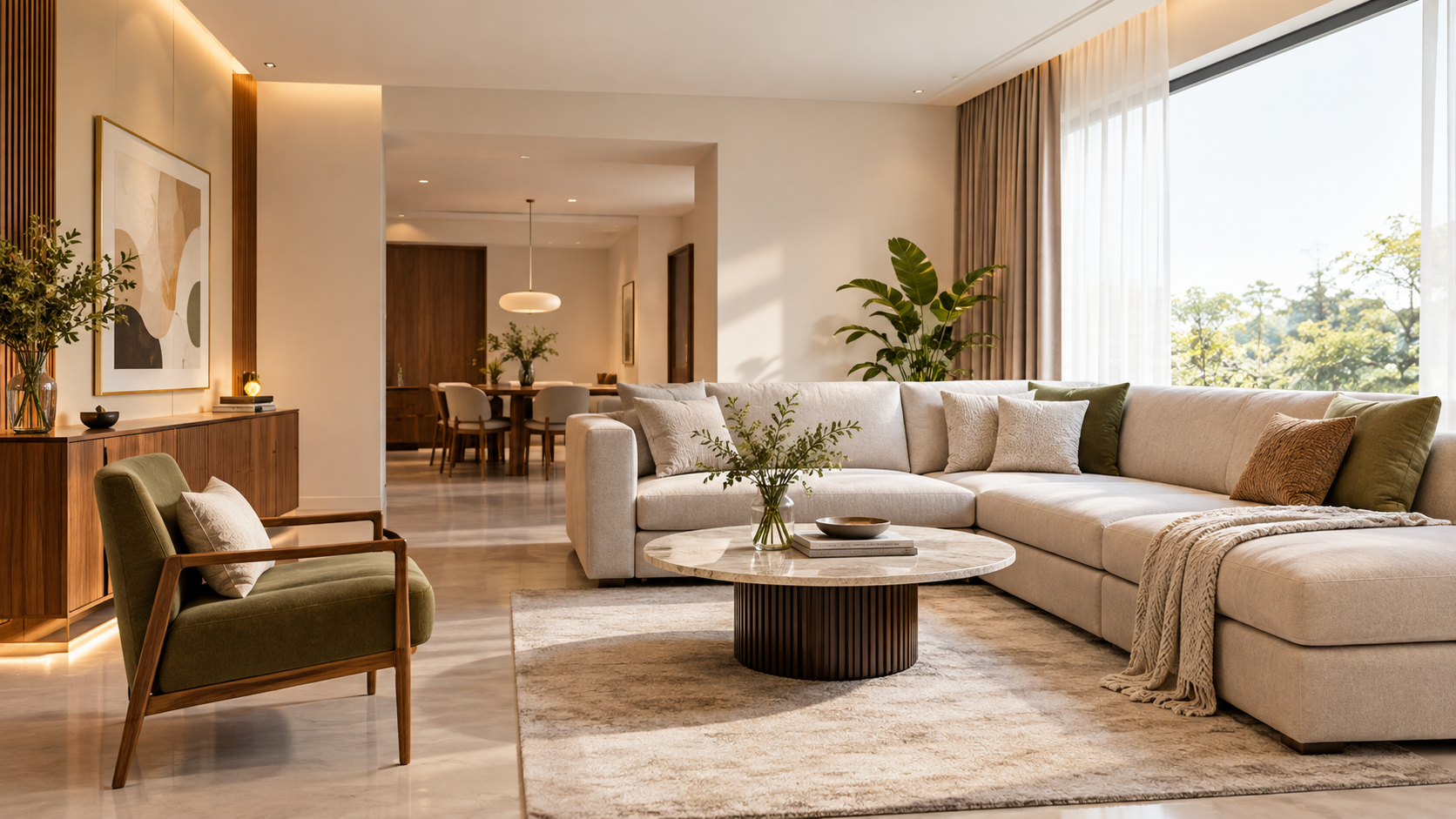
Make the living room welcoming with comfortable seating, meaningful artwork, layered lighting, and a few carefully selected accessories.
Bedroom
Your bedroom should prioritize relaxation. Use colors, fabrics, lighting, and furniture that create a comfortable personal retreat.
Kitchen
Design the kitchen around your cooking habits. Storage, countertop space, appliance placement, and workflow should match how you prepare food.
Home Office
A personalized home office should combine productivity and comfort. Choose an ergonomic chair, suitable lighting, organized storage, and décor that inspires you.
Balcony
Even a small balcony can become a personal relaxation zone with plants, compact seating, outdoor lighting, and weather-resistant décor.
Personalized Interior Design for Indian Homes
Indian homes often offer an excellent opportunity to combine contemporary design with cultural influences.
Homeowners can create unique interiors by combining modern furniture with traditional craftsmanship, Indian textiles, regional artwork, handcrafted décor, brass accents, wooden furniture, or locally inspired patterns.
For apartments in cities such as Mumbai, Pune, Bengaluru, Hyderabad, Delhi NCR, Chennai, and Ahmedabad, space-efficient personalized design can be particularly valuable.
The best approach is to adapt the design to the home's size, climate, lifestyle, and local preferences rather than copying an interior seen online.
How to Create a Personalized Interior on a Budget
Personalized design doesn't always require an expensive renovation.
Start with affordable changes:
- Rearrange existing furniture.
- Add meaningful artwork.
- Introduce indoor plants.
- Change cushions and throws.
- Upgrade lighting.
- Add a statement rug.
- Create a photo display.
- Add decorative shelves.
- Refresh cabinet hardware.
- Introduce natural textures.
Small changes can significantly alter the character of a room.
Common Mistakes to Avoid
Personalization doesn't mean adding everything you like.
Avoid these common mistakes:
- Using too many colors
- Overcrowding rooms
- Buying furniture without measuring
- Copying social media interiors exactly
- Ignoring storage
- Choosing appearance over comfort
- Using too many decorative objects
- Mixing styles without visual balance
- Neglecting lighting
- Replacing everything instead of improving what already works
A successful personalized interior should feel intentional, comfortable, functional, and authentic.
Frequently Asked Questions
What is personalized interior design?
Personalized interior design is an approach where the home's layout, furniture, colors, materials, lighting, and décor are selected according to the homeowner's personality, lifestyle, preferences, and needs.
How can I make my home reflect my personality?
Start by identifying your favorite colors, hobbies, materials, memories, and lifestyle requirements. Incorporate meaningful artwork, photographs, furniture, books, collections, lighting, and décor that represent those interests.
Can personalized interiors work in small apartments?
Yes. Small apartments can be personalized using multifunctional furniture, vertical storage, compact décor, custom furniture, layered lighting, plants, artwork, and carefully selected colors.
How much does personalized interior design cost in India?
The cost varies significantly depending on the home's size, location, materials, furniture, customization, and scope of work. A simple décor refresh can cost much less than a complete interior renovation.
Should I follow interior design trends?
Use trends as inspiration rather than strict rules. Choose elements that complement your lifestyle and personality, especially for expensive or long-term investments.
What makes a home feel more personal?
Meaningful photographs, artwork, books, travel memories, family heirlooms, hobbies, favorite colors, customized furniture, plants, and objects with personal stories can make a home feel more authentic.
Final Thoughts
A beautiful home doesn't have to look like a showroom.
The best interiors tell a story about the people who live there. Whether your personality is minimalist, artistic, traditional, adventurous, practical, or eclectic, your home can reflect those qualities through thoughtful furniture, colors, materials, lighting, artwork, and décor.
Comments (0)
Leave a Comment
No comments yet. Be the first to comment!