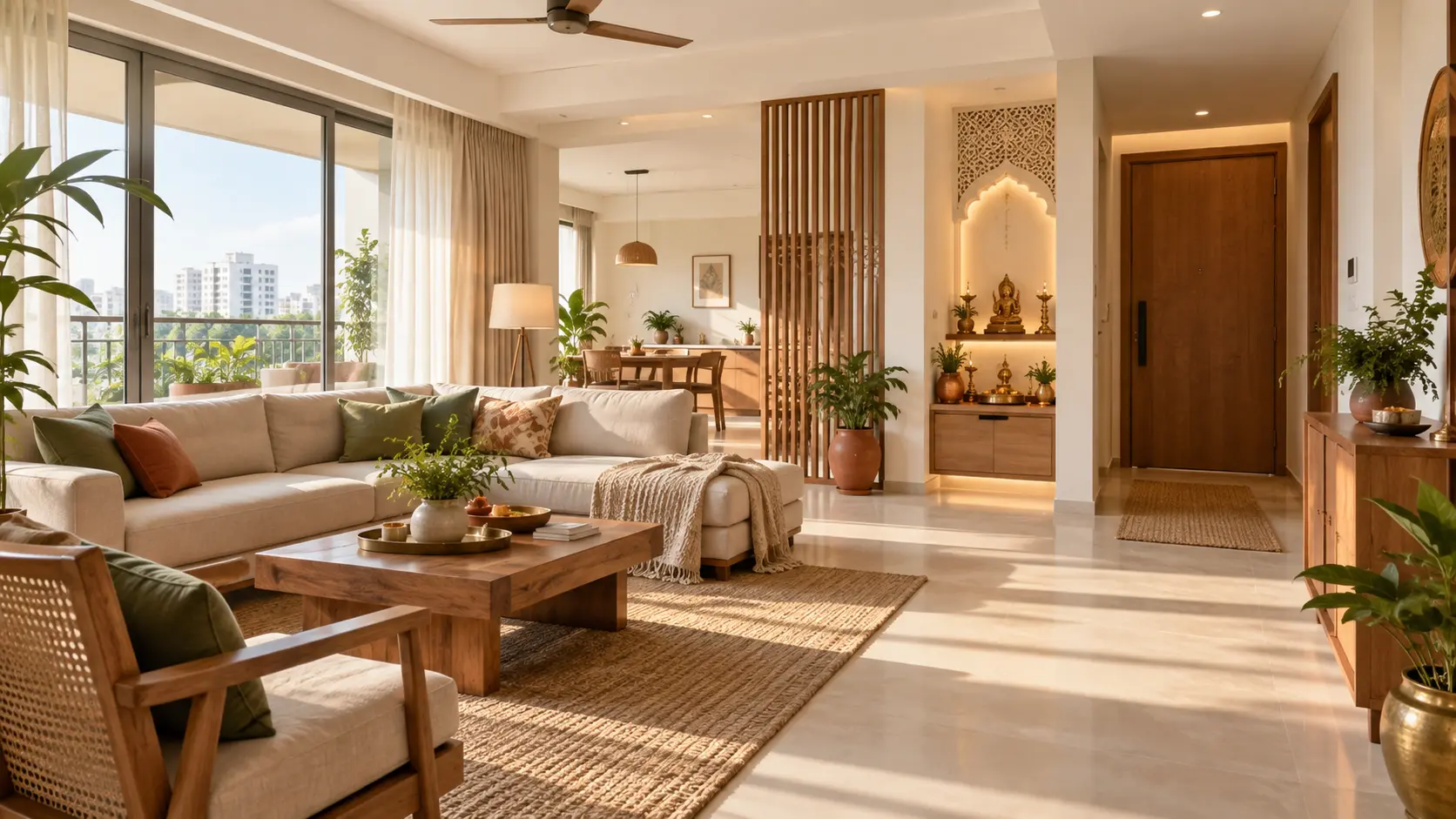
Vastu Tips for a Positive Home Interior: A Practical Room-by-Room Guide
A peaceful home is not created through decoration alone. Natural light, fresh air, organised rooms, comfortable furniture and thoughtful space planning all influence how a home feels.
Vastu Shastra is a traditional Indian system of planning spaces according to directions, natural elements and functional zones. Many homeowners use its principles while arranging entrances, kitchens, bedrooms, living rooms and pooja spaces.
These Vastu tips for a positive home interior can help you create a balanced, welcoming and clutter-free home without necessarily making major structural changes.
Quick Answer: How Can You Make Your Home Interior Vastu-Friendly?
According to common Vastu principles, you can make your home interior more balanced by:
- Keeping the main entrance clean and well-lit
- Allowing natural light and fresh air indoors
- Removing broken and unused objects
- Keeping the centre of the home open
- Using calm colours in bedrooms
- Placing heavy furniture carefully
- Maintaining an organised kitchen
- Creating a peaceful pooja or meditation area
- Repairing water leakage
- Keeping every room functional and clutter-free
Vastu is a traditional belief system rather than a substitute for architectural, structural or health advice. Use the suggestions that are practical for your home and lifestyle.
1. Keep the Main Entrance Bright and Welcoming
The main entrance creates the first impression of your home. According to Vastu, it is also considered an important point for the movement of energy.
Keep the entrance:
- Clean and clutter-free
- Properly illuminated
- Easy to access
- Free from broken objects
- Organised with concealed shoe storage
- Decorated without blocking movement
Make sure the main door opens smoothly and does not produce unpleasant sounds. Repair damaged handles, locks and nameplates.
A simple plant, warm light or elegant wall décor can make the entrance feel inviting. Avoid placing too many decorative objects near the doorway.
2. Allow Natural Light and Ventilation
Sunlight and ventilation can make interiors feel fresh, open and comfortable. Keep windows clean and avoid blocking them with large furniture.
You can improve natural light by using:
- Sheer curtains
- Light wall colours
- Strategically positioned mirrors
- Simple window treatments
- Furniture with lighter visual weight
- Open layouts where practical
Cross-ventilation is especially important in Indian homes because it can help manage heat, humidity and cooking odours.
3. Keep the Centre of the Home Open
In Vastu, the central area of a home is traditionally known as the Brahmasthan. It is generally recommended to keep this area light, open and free from unnecessary clutter.
Avoid placing extremely heavy furniture or crowded storage in the centre of the house where possible.
In a compact apartment, you may not have a clearly defined central zone. In that case, focus on maintaining comfortable circulation and avoiding furniture that blocks movement.
4. Choose Vastu-Friendly Colours
Colour can affect the visual mood of a room. Vastu recommendations commonly favour colours based on a room’s purpose and direction.
Practical colour options include:
- White for a clean and open appearance
- Cream for warmth
- Beige for a neutral interior
- Light yellow for an uplifting atmosphere
- Soft green for a nature-inspired effect
- Pale blue for calmness
- Peach for warmth and comfort
- Light brown for an earthy appearance
Avoid using too many dark colours in small rooms, as they can make the space feel visually heavy.
You do not need to repaint the entire house. Introduce suitable colours through curtains, cushions, rugs, artwork and bedding.
5. Arrange the Living Room Thoughtfully
The living room is used for relaxation, conversations and welcoming guests. Its layout should support comfort and easy movement.
According to common Vastu guidance:
- Keep the living room bright and organised
- Position heavy sofas along the south or west side where practical
- Avoid blocking doors and windows
- Keep the centre relatively open
- Use warm and comfortable lighting
- Select furniture according to the room’s size
- Avoid displaying broken decorative items
The exact direction may not be possible in every apartment. Prioritise a practical arrangement that allows natural light, comfortable seating and safe circulation.
6. Place the Television Carefully
A television can become the dominant feature of a living room. Vastu traditions often associate electronic equipment with the fire element and suggest placing it toward the southeast where the layout permits.
Make sure:
- The screen is at a comfortable height
- Cables are concealed safely
- The TV does not block a window
- Electrical points are not overloaded
- The unit has adequate ventilation
- The screen does not create excessive glare
A minimal TV panel with concealed storage can keep the living room organised.
7. Follow Practical Bedroom Vastu
The bedroom should support rest, privacy and relaxation.
Common bedroom Vastu suggestions include:
- Place the bed against a stable wall
- Avoid positioning the bed directly under a heavy beam
- Keep the space beneath the bed organised
- Use soothing colours
- Limit work-related equipment
- Avoid excessive mirrors facing the bed
- Use soft, layered lighting
- Keep electronic clutter under control
Traditional Vastu guidance often suggests sleeping with the head toward the south or east. If this arrangement is not possible, prioritise comfort, ventilation and a safe furniture layout.
8. Select Calm Bedroom Colours
Soft colours generally work better in bedrooms than highly energetic shades.
Suitable options include:
- Warm white
- Cream
- Beige
- Soft pink
- Muted peach
- Sage green
- Pale blue
- Light earthy brown
Use stronger colours as small accents rather than covering every wall. Natural fabrics, warm wood and uncluttered surfaces can further improve the bedroom’s sense of calm.
9. Plan the Kitchen According to Function and Vastu
The kitchen is traditionally connected with the fire element. Southeast is commonly considered a preferred kitchen direction in Vastu, while northwest may be considered an alternative.
For an existing home, changing the kitchen’s location may not be practical. You can still improve the space through:
- Good ventilation
- Adequate task lighting
- Clear countertops
- Organised storage
- Safe separation of water and cooking zones
- Proper chimney maintenance
- Immediate repair of leaking taps
- Regular removal of expired food
Traditional guidance often recommends cooking while facing east when the kitchen layout allows it.
10. Use Suitable Kitchen Colours
Warm and natural shades can make the kitchen feel welcoming.
Consider:
- Cream
- Light yellow
- Soft green
- Peach
- Warm white
- Natural wood
- Muted terracotta accents
Avoid using extremely dark finishes throughout a small kitchen, especially if it receives limited natural light. Choose materials that are easy to clean and suitable for Indian cooking.
11. Create a Peaceful Pooja Room
The northeast is traditionally considered favourable for a pooja or meditation area. East and north-facing arrangements are also commonly preferred.
Keep the pooja space:
- Clean and quiet
- Properly ventilated
- Free from unrelated storage
- Softly illuminated
- Easy to maintain
- Separate from footwear and cleaning supplies
If your apartment does not have a separate pooja room, create a compact wall-mounted or cabinet-style unit in a calm corner. Ensure lamps and electrical lighting are used safely.
12. Position Mirrors Carefully
Mirrors can make a small home appear brighter and more spacious. Vastu traditions often recommend placing mirrors on north or east-facing walls where suitable.
Avoid positioning mirrors where they:
- Reflect excessive clutter
- Create glare
- Directly face the bed
- Face an untidy entrance
- Interfere with privacy
- Become a safety risk
Use mirrors to reflect natural light, attractive artwork or a clean part of the room.
13. Keep Bathrooms Clean and Ventilated
A well-maintained bathroom supports hygiene and comfort.
Focus on:
- Proper ventilation
- Dry flooring
- Functional drainage
- Regular cleaning
- Concealed storage
- Repairing leaking taps
- Keeping the door closed when appropriate
- Using light and fresh colours
Choose moisture-resistant materials and make sure electrical fittings are safe for wet areas.
14. Create a Focused Study Area
A study area should minimise distractions and provide sufficient lighting. Common Vastu recommendations suggest facing east or north while studying or working, where possible.
A practical study area should include:
- Comfortable desk height
- Supportive seating
- Natural or task lighting
- Organised stationery
- Concealed cables
- Limited visual clutter
- Adequate ventilation
15. Use Indoor Plants Mindfully
Healthy plants can introduce natural colour and softness into a home.
Popular choices for Indian interiors include:
- Money plant
- Tulsi
- Areca palm
- Snake plant
- Rubber plant
- Peace lily
- Bamboo palm
Select plants according to available light, ventilation and maintenance requirements. Remove unhealthy or completely dried plants and avoid placing plants where they block movement.
16. Remove Broken and Unused Items
One of the simplest Vastu-inspired changes is decluttering.
Remove or repair:
- Broken clocks
- Damaged mirrors
- Cracked decorative objects
- Non-working electronics
- Torn furnishings
- Unused boxes
- Expired products
- Furniture that blocks movement
Decluttering creates practical storage space and makes the home easier to clean.
17. Repair Water Leakage
Leaking taps, pipes and toilets waste water and can cause dampness, mould and property damage. Traditional Vastu also associates continuous leakage with the loss of resources.
Inspect:
- Kitchen taps
- Bathroom fittings
- Water tanks
- Washing-machine connections
- Sink pipes
- Balcony drainage
- Ceiling dampness
18. Use Warm and Balanced Lighting
Lighting affects how comfortable and attractive a home feels.
Use a combination of:
- Natural daylight
- Ceiling lights
- Wall lights
- Table lamps
- Floor lamps
- Task lights
- Concealed lighting
Choose warm-white lighting for living rooms and bedrooms. Kitchens, bathrooms and study areas may require brighter task lighting.
19. Organise Storage Properly
Storage is important in Indian apartments, but bulky cabinets can make small rooms feel crowded.
Use:
- Full-height wardrobes
- Storage beds
- Floating cabinets
- Built-in TV storage
- Organised kitchen drawers
- Closed shoe cabinets
- Multipurpose furniture
- Labelled internal storage
Keep frequently used objects accessible and avoid storing unnecessary items indefinitely.
20. Use Natural Materials
Natural-looking materials can create a warm and grounded interior.
Consider:
- Wood
- Cane
- Bamboo
- Cotton
- Linen
- Jute
- Clay
- Natural stone
- Handmade ceramics
Select materials according to the local climate. Moisture-resistant alternatives may be more practical in humid cities such as Mumbai, Chennai and Kolkata.
Simple Vastu Tips Without Structural Changes
You do not need to demolish walls to make your existing home feel more organised and Vastu-conscious.
- Declutter the entrance
- Improve lighting
- Repair broken fixtures
- Rearrange movable furniture
- Add healthy indoor plants
- Use calm colours
- Organise cabinets
- Conceal electrical wires
- Repair water leakage
- Keep windows clean
- Remove damaged décor
- Create a peaceful prayer or meditation corner
These changes can improve functionality and appearance even when directions cannot be altered.
Vastu Tips for Small Indian Apartments
Compact 1 BHK and 2 BHK flats require flexible solutions.
- Avoid oversized furniture
- Use vertical storage
- Keep walking areas clear
- Choose light colours
- Use mirrors thoughtfully
- Install multifunctional furniture
- Keep the entrance organised
- Allow windows to remain visible
- Use closed storage to reduce clutter
- Avoid too many decorative objects
Practical space planning should come before rigid direction-based rules.
Location-Based Vastu Considerations
Vastu for Homes in Mumbai
Mumbai homes often have compact layouts, limited natural light and high humidity. Focus on ventilation, moisture-resistant materials, concealed storage and clutter-free entrances.
Vastu for Homes in Navi Mumbai
Many Navi Mumbai homes are located in planned residential developments. Use the available balcony light, maintain open circulation and select furniture according to the apartment’s dimensions.
Vastu for Homes in Thane
Consider monsoon ventilation, water leakage, balcony drainage and practical storage while applying Vastu principles in Thane homes.
Vastu for Homes in Pune
Pune homes may experience seasonal temperature changes. Combine natural ventilation, warm materials and appropriate sunlight management with Vastu-based planning.
Vastu for Homes in Bengaluru
Bengaluru apartments can benefit from natural light, indoor plants and flexible furniture. Avoid excessive indoor plants in rooms with insufficient ventilation.
Vastu for Homes in Delhi NCR
Manage strong seasonal heat and cold through curtains, ventilation and suitable materials. Apply Vastu directions only where they do not reduce everyday comfort.
Common Vastu Mistakes to Avoid
- Following directions without considering usability
- Blocking windows with large furniture
- Using too many symbolic objects
- Believing every structural issue can be solved through décor
- Ignoring ventilation and electrical safety
- Keeping broken items as remedies
- Using plants unsuitable for indoor conditions
- Making expensive changes without professional guidance
- Expecting guaranteed financial or health outcomes
Vastu-inspired interiors should remain safe, comfortable and practical.
Frequently Asked Questions
Which direction is best for the main entrance according to Vastu?
North, east and northeast are commonly considered favourable in Vastu traditions. However, the entrance’s safety, accessibility, ventilation and legal building plan are more important than direction alone.
Which direction should the bed face?
Traditional Vastu guidance commonly suggests sleeping with the head toward the south or east. Choose an arrangement that also provides comfort and safe movement.
Where should a mirror be placed according to Vastu?
North or east-facing walls are commonly recommended. Avoid mirrors that directly face the bed or reflect clutter.
Which colours are considered suitable for a positive home?
Warm white, cream, beige, light yellow, pale blue, soft green and peach are commonly used to create calm and welcoming interiors.
Can Vastu be corrected without demolition?
Many homeowners make non-structural improvements through decluttering, lighting, furniture placement, colour, storage and repairs. Structural changes should only be made after consulting qualified professionals.
Where should the kitchen be located according to Vastu?
The southeast is traditionally preferred, while the northwest is often considered an alternative. Existing kitchens can still be improved through ventilation, organisation and safe planning.
Which direction is suitable for a pooja room?
The northeast is commonly considered suitable. A clean and peaceful east or north-facing arrangement may also be used where practical.
Are Vastu principles scientifically proven?
Vastu is a traditional architectural and cultural belief system. Its spiritual or energy-related claims are not established scientific guarantees. Practical ideas such as ventilation, natural light, cleanliness and uncluttered movement can improve a home’s usability.
Final Thoughts
The best Vastu tips for a positive home interior are those that create a clean, comfortable, safe and functional living environment.
You do not need to follow every suggestion rigidly or rebuild your home. Begin with practical improvements such as better lighting, improved ventilation, organised storage, repaired fixtures and comfortable furniture placement.
Combine traditional Vastu preferences with professional space planning and your family’s real needs. A home feels positive when it supports the people living in it.
Disclaimer: Vastu Shastra is a traditional belief system. This article is provided for general informational purposes and does not guarantee health, wealth or specific outcomes. Seek qualified architectural, structural and electrical advice before making significant changes.

Comments (0)
Leave a Comment
No comments yet. Be the first to comment!